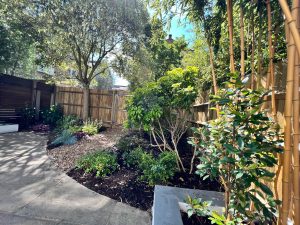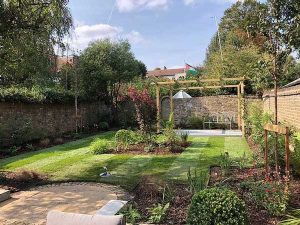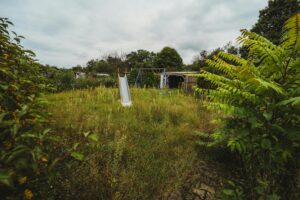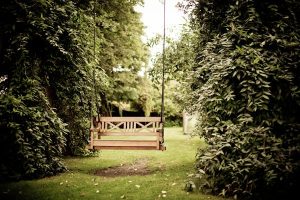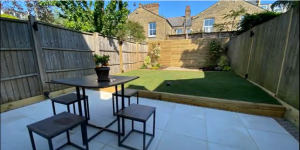

Artificial grass gets sold as the maintenance-free answer to a tired lawn, and for a certain kind of space, a rooftop terrace, a shaded basement flat with no soil to speak of, it can genuinely be the right call. But for most gardens across Wandsworth, Wimbledon, Putney and the rest of Southwest London, it’s solving the wrong problem. You’re not short of grass. You’re short of a lawn or a surface that actually suits your soil, your light, and how your family uses the space. We’re not alone in thinking this either; we’re proud supporters of the SGD’s Say No to Plastic Grass campaign, which pushes for exactly the shift this article is about.
Here’s the thing nobody selling artificial turf mentions: it doesn’t drain like soil does. Rain hits it and runs straight off, which sounds fine until you remember how many streets round here already flood in a heavy downpour, Wandsworth and Balham both had drains overwhelmed more than once in recent winters. It also gets uncomfortably hot underfoot in summer sun, hot enough that bare feet and paws avoid it by early afternoon, sheds microplastic as it wears, and does nothing for the bees and hoverflies that used to visit your borders. None of that is a reason to panic. It’s a reason to look at what actually works instead, and there’s more choice than most people realise once you stop assuming the only options are grass or plastic.
Most SW London gardens sit on heavy clay, which is exactly why plastic turf causes more problems here than it does elsewhere. Lay it over ground that already holds water badly in winter and bakes solid in a dry spell, and you’ve built a heat trap with nowhere for the rain to go. That’s the starting point for everything else in this guide: your soil decides what actually works, not what’s easiest to advertise.
What Are the Best Alternatives to Artificial Grass?
Four categories cover most of what we install instead of plastic turf: living groundcovers you can walk on, hard surfaces like gravel and paving, mulch for the shaded bits nothing else will grow in, and wilder planting that leans into biodiversity rather than fighting it. Which one fits your garden depends less on taste and more on your soil, your light, and how the space actually gets used day to day. If sustainability is the driving reason you’re reading this at all, it’s worth a broader look at what makes a garden genuinely sustainable beyond just the lawn, because the choices around irrigation, materials, and plant sourcing all feed into the same picture.
That’s where Southwest London throws in its own complication. Most gardens here sit on heavy clay, which changes the calculation compared with generic advice written for sandy soil down south or chalk further north. A groundcover that establishes easily in a Surrey garden can sulk for two years in Wandsworth clay without the ground being prepared properly first. Terraced gardens add a further wrinkle, narrow, often shaded by neighbouring walls, with soil that’s been compacted by decades of foot traffic before you even started thinking about grass alternatives.
Ground Cover Plants for a Low-Maintenance SW London Lawn
Creeping Thyme
If what you want is that low, green, walkable feel without the weekly mow, creeping thyme is worth a proper look. It forms a dense, aromatic mat that copes with occasional foot traffic and turns pink or purple through summer, and bees seem to find it within days of the first flowers opening. It wants sun and good drainage though, so on heavy clay you’ll need to break the ground up and work in grit before it goes in. Skip that step and it sulks, sitting there half-alive for a season before giving up entirely, which is the single most common mistake we see when someone’s tried this themselves.
Clover and Micro-Clover
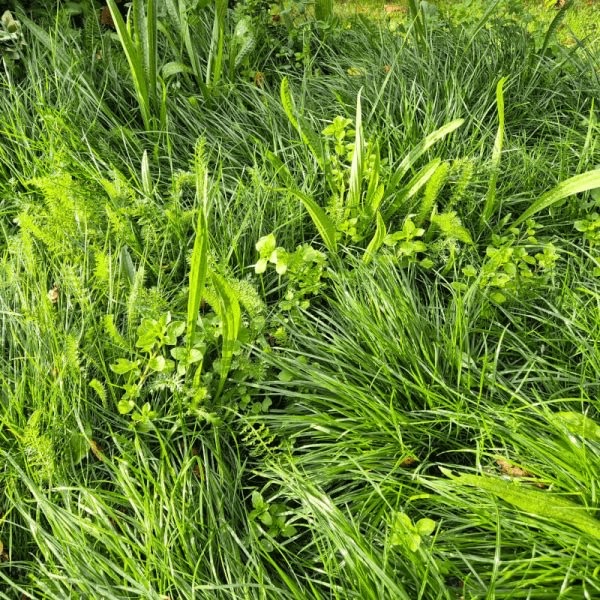
Clover does a different job rather well. Micro-clover and white clover stay green through droughts that leave a traditional lawn brown and crisp, they fix their own nitrogen so you’re not reaching for fertiliser, and they hold up fine under a dog running laps or a toddler doing whatever toddlers do to grass. It’s soft underfoot too, which matters more than people expect once they’ve actually walked on it barefoot on a warm evening.
Chamomile
Then there’s chamomile, specifically the non-flowering ‘Treneague’ variety, which suits a path or a seating area rather than a full lawn. Brush past it and you get that faint apple smell that somehow makes an entire garden feel more finished, particularly on a warm afternoon when the scent lifts as you walk over it. It won’t take heavy traffic, so think quiet corners rather than the spot where the football lands, and it’s slower to establish than clover, so patience matters here more than with the other two.
None of these arrive overnight, and picking the right one starts with understanding what actually grows well in SW London’s particular climate and soil. Establishing a groundcover lawn properly means dealing with the soil first, which is exactly the kind of groundwork our soft landscaping team handles before a single plant goes in. We work in peat-free soil and use rainwater for irrigation wherever we can, because building a lawn that thrives without constant intervention starts underground, not with what you plant on top.
Hardscaping and Permeable Surfaces for SW London Gardens
Gravel
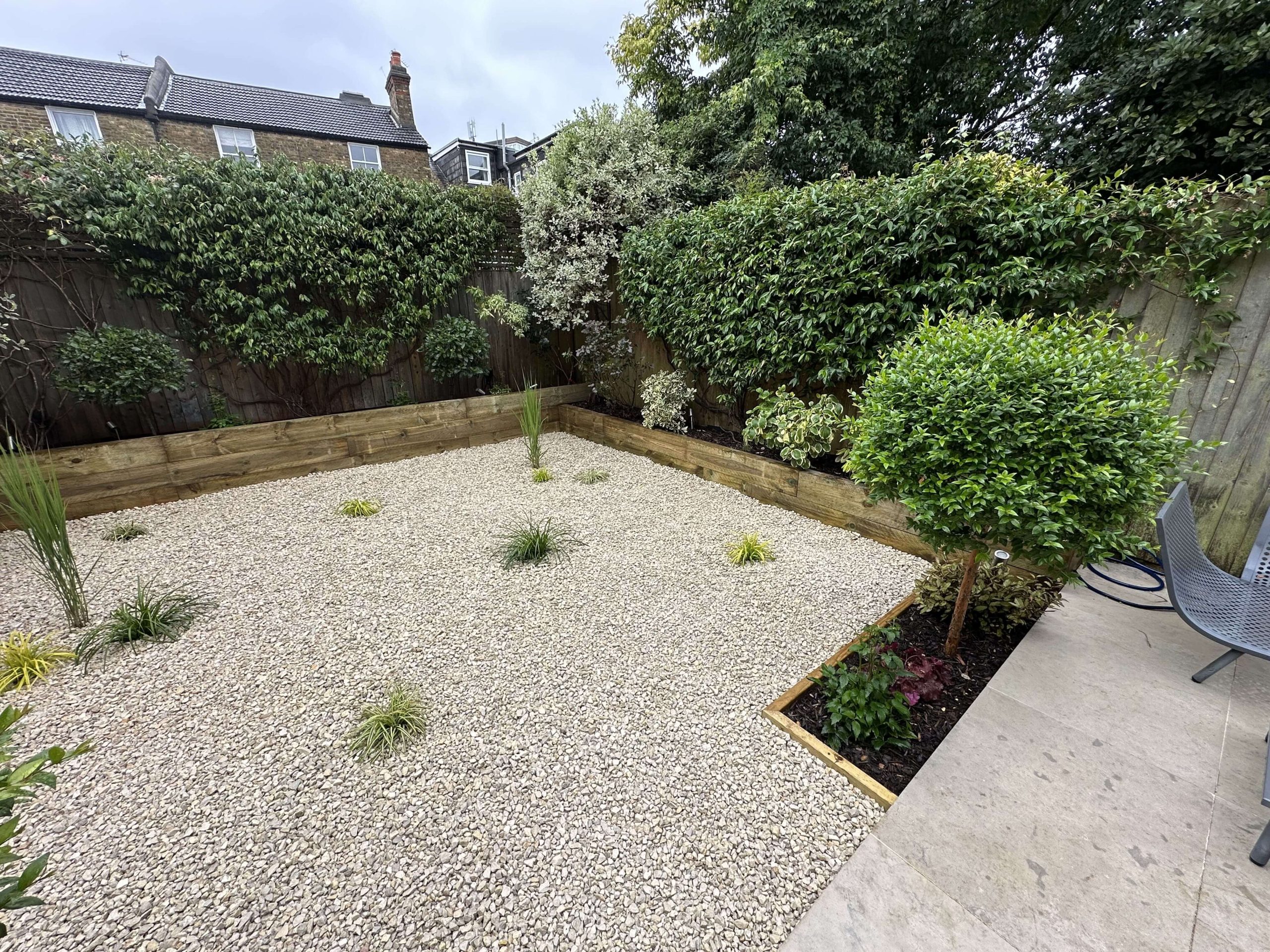
Not every part of a garden wants planting. Paths, seating areas, and anywhere that gets heavy footfall often work better as a hard surface, and gravel or pea shingle is the cheapest, simplest option going. It’s permeable, needs no mowing, and a weed membrane underneath keeps maintenance down to almost nothing, though it does need a top-up of stone every few years as it settles and gets kicked around. It’s also the easiest way to handle a front garden if off-street parking is the goal, since anything over five square metres of impermeable hard surfacing at the front needs permission, while gravel usually doesn’t.
Stepping Stones and Paving
Stepping stones give you something a bit more structured, particularly down a side return or across a stretch of lawn that gets worn bare by the school run. Leave gaps between the stones and fill them with moss, sedum, or a low-growing sempervivum, and you end up with something that looks considered rather than utilitarian. It’s a good middle ground for anyone nervous about committing an entire garden to one surface, since you can start with a single path and expand later once you’ve seen how it wears.
Bark Mulch
Under trees, where grass has usually already given up, bark mulch earns its place. It cushions the ground for children playing, suppresses weeds, holds moisture through dry spells, and slowly breaks down to improve the soil underneath it. It’s one of the few solutions that gets better the longer it’s left alone, though it does need topping up roughly once a year as it decomposes, which is a small trade for how little else it asks of you.
Biodiversity-Friendly Alternatives
Wildflower Meadows
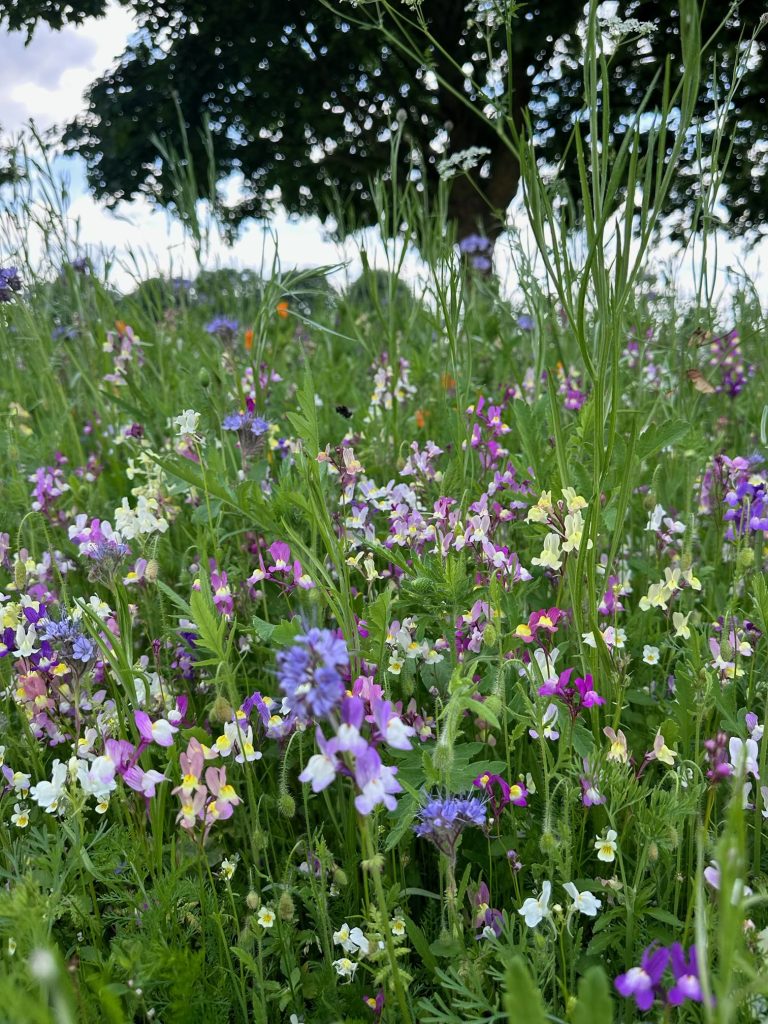
If there’s a corner of your garden that never quite works, too shaded for a lawn, too awkward to mow, a wildflower strip can turn that dead space into the most interesting part of the plot. Native wildflowers mixed with fine grasses need a fraction of the fertilising a traditional lawn demands, and a cut once or twice a year in late summer is usually all the maintenance they ask for. Bees and butterflies find it long before you’ve finished admiring it, and it’s often the first step towards properly rewilding a London garden rather than just tweaking it. Even a modest strip along a fence line makes a visible difference to what turns up in your garden by the second summer.
Moss Gardens
Damp, heavily shaded spots, the bit behind the shed that never sees direct sun, are exactly where moss thrives while grass gives up entirely. Rather than fighting it every year with feed and moss killer, it’s worth treating that patch as a shady corner to be worked with instead of against. A moss garden asks for almost nothing once it’s established, and it’s genuinely lovely underfoot, cool and springy in a way that stone paving never manages.
How to Choose an Alternative to Artificial Grass for Your Garden
Match the option to what your garden actually gives you. A sunny, well-drained spot with kids running through it most weekends probably wants clover. A shaded side return under a mature tree is asking for moss, bark mulch, or a stepping stone path, not a groundcover that’s never going to thrive there anyway. If you’re fronting a conservation area, and parts of Wimbledon Village and Richmond fall into that category, it’s worth checking whether you need planning permission before anything permanent goes down. It costs nothing and saves a genuine headache later.
Some clients get to this point and decide they still want an actual lawn, grass, mowing, the whole thing, just done properly. That’s fine too. We lay Rolawn Medallion® turf because the fine fescue and perennial ryegrass blend handles shaded, clay-heavy gardens far better than the coarse budget turf from a garden centre, and for anyone who wants pollinators without giving up the lawn entirely, Rolawn BioScapes® blends native wildflowers straight into the grass. Our lawn laying team can tell you honestly whether your garden’s soil and light suit that route better than a groundcover, and often the answer is a mix of two or three of these options across different parts of the same garden rather than one solution for everything.
Why The Southwest London Gardener Steers Clients Away From Plastic
We’ve been doing this work across Wandsworth, Wimbledon, Putney, Richmond and the surrounding SW postcodes long enough to have watched artificial grass go from a novelty to something we’re regularly asked to remove. It’s not that we’re against convenience. It’s that we’ve seen what happens underneath plastic turf a few years in, compacted, lifeless soil that takes real work to bring back, and we’d rather steer a client away from that outcome before they’ve spent the money than fix it afterwards.
Our approach leans on native plants sourced through relationships we’ve built with local nurseries and growers over years, plants that are already suited to this soil and this climate rather than fighting to survive in it. We use peat-free soil on every job and rainwater for irrigation wherever the site allows it, because a garden that depends on mains water and synthetic feed to look good isn’t really the low-maintenance option it’s sold as. Where a client already has established plants, we look at what can be pruned back and saved before we recommend ripping anything out, since a plant that’s already proven it can handle your particular garden is worth more than a fresh one that hasn’t been tested yet.
What that adds up to, in practice, is a team that’s walked more Southwest London clay than most, and one that would rather tell you honestly that clover suits your garden better than a lawn than sell you whatever’s easiest to install. That’s the same reasoning behind everything in this guide.
Conclusion
There isn’t one correct answer here, whatever a well-branded artificial grass advert might suggest. It comes down to your soil, your light, and how you actually use the space, not which option looks best in a catalogue photo. And if you’ve already got artificial grass down and you’re ready to be rid of it, taking it out properly is a lot more involved than most people expect, so it’s worth reading up before you start pulling at corners.
Gardens across Wandsworth, Wimbledon, Balham, Putney and Battersea all share that same stubborn London clay, which is exactly why a scheme that looks effortless two streets over can struggle in your own garden without the groundwork done first. We’ve spent years walking these exact soils, working out what actually establishes here versus what just looks good on paper. If you’d rather have someone assess your garden honestly before you commit to anything, plastic or otherwise, get in touch and we’ll tell you straight what your space can support. No pressure, just an honest look at what will actually thrive where you live, and a lawn or surface you won’t be thinking about replacing again in five years’ time.