
In our latest project, we’ve taken another step forward in our commitment to natural gardening by replacing artificial grass with biodiverse turf. It’s a change that perfectly aligns with our sustainable approach while delivering practical benefits for London gardens.
The transformation wasn’t just aesthetic—it represented everything we believe in at The Southwest London Gardener: working with nature rather than against it.
Saying Goodbye to Artificial
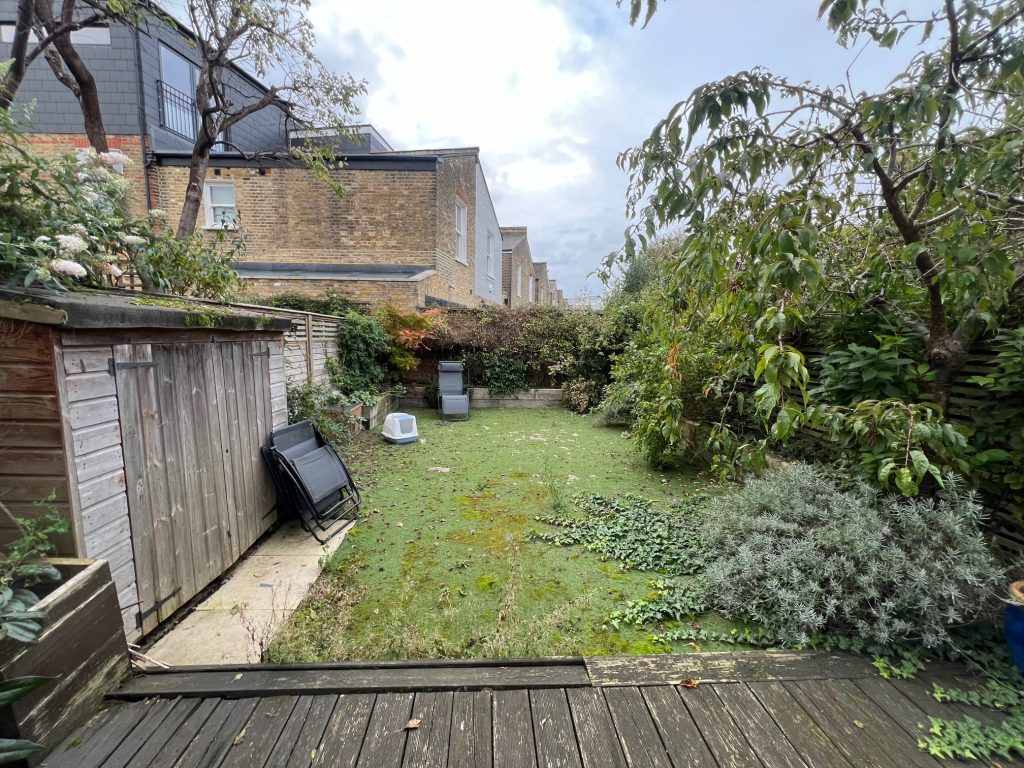
Artificial grass might seem like a low-maintenance option, but it creates significant environmental problems. It eliminates the natural benefits of grass, offers nothing to local wildlife, and eventually ends up in landfill.
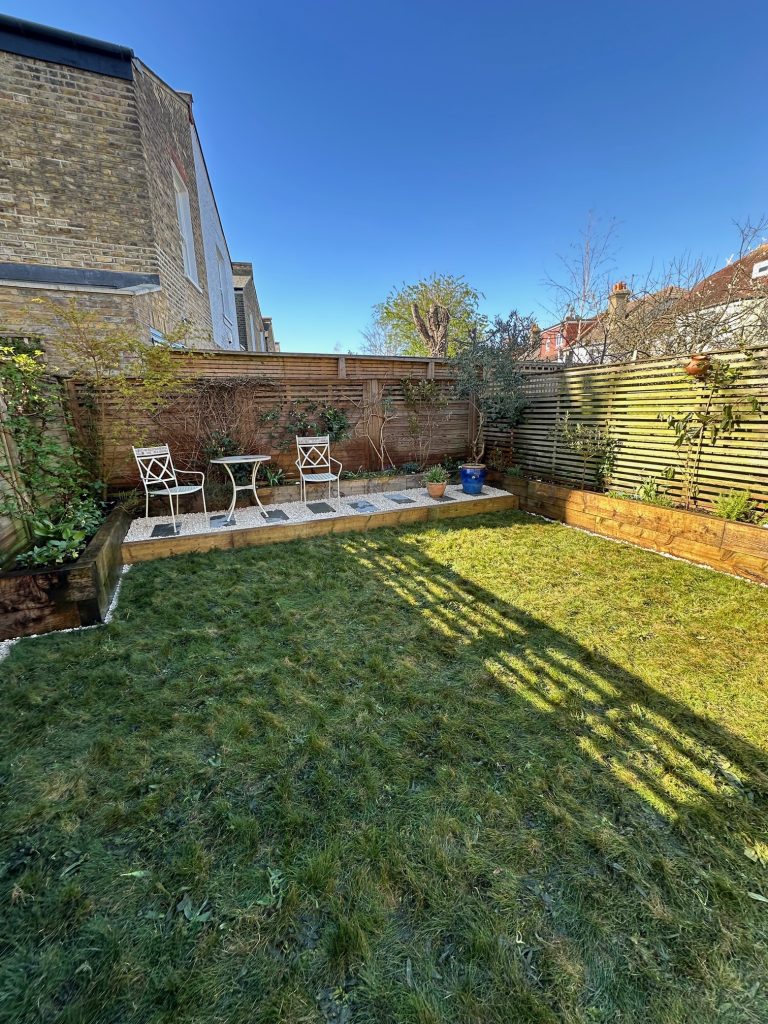
When a recent client approached us about replacing their artificial lawn, we knew exactly what to use. The artificial turf we removed had been installed years earlier and was already showing signs of degradation. A change was needed and after some research, we opted to try out biodiverse turf for the first time.
What is Biodiverse Turf?
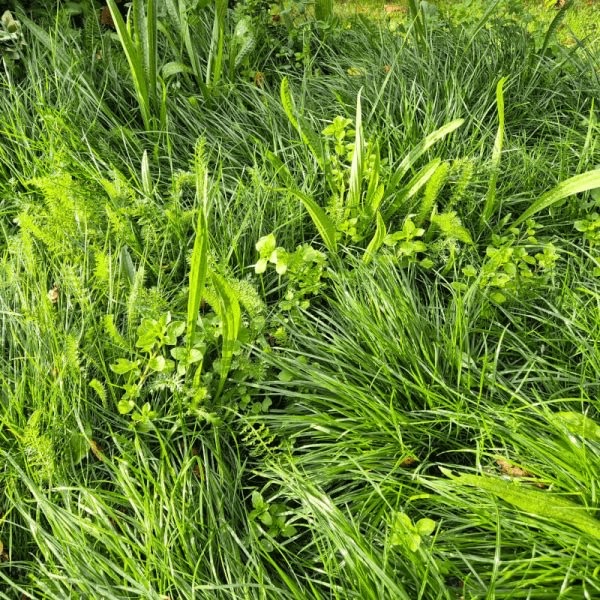
Unlike conventional grass lawns that feature just a handful of species, biodiverse turf combines multiple plant varieties to create a living ecosystem rather than just a green carpet. The turf we’ve installed consists of 80% grass fescues (including Creeping Red Fescue and Slender Creeping Fescue) and 20% native wildflower species.
These wildflowers aren’t random additions – they’re carefully selected natives including Birdsfoot Trefoil, Common Daisy, Kidney Vetch, Red Campion, Wild Carrot, and Yarrow. Each plays a specific role in creating a balanced, resilient growing environment.
The combination of different plant species creates a visually interesting tapestry that changes subtly throughout the seasons, rather than the static, unchanging appearance of the artificial grass that came before it.
Five Reasons Why We Chose to Use Biodiverse Turf
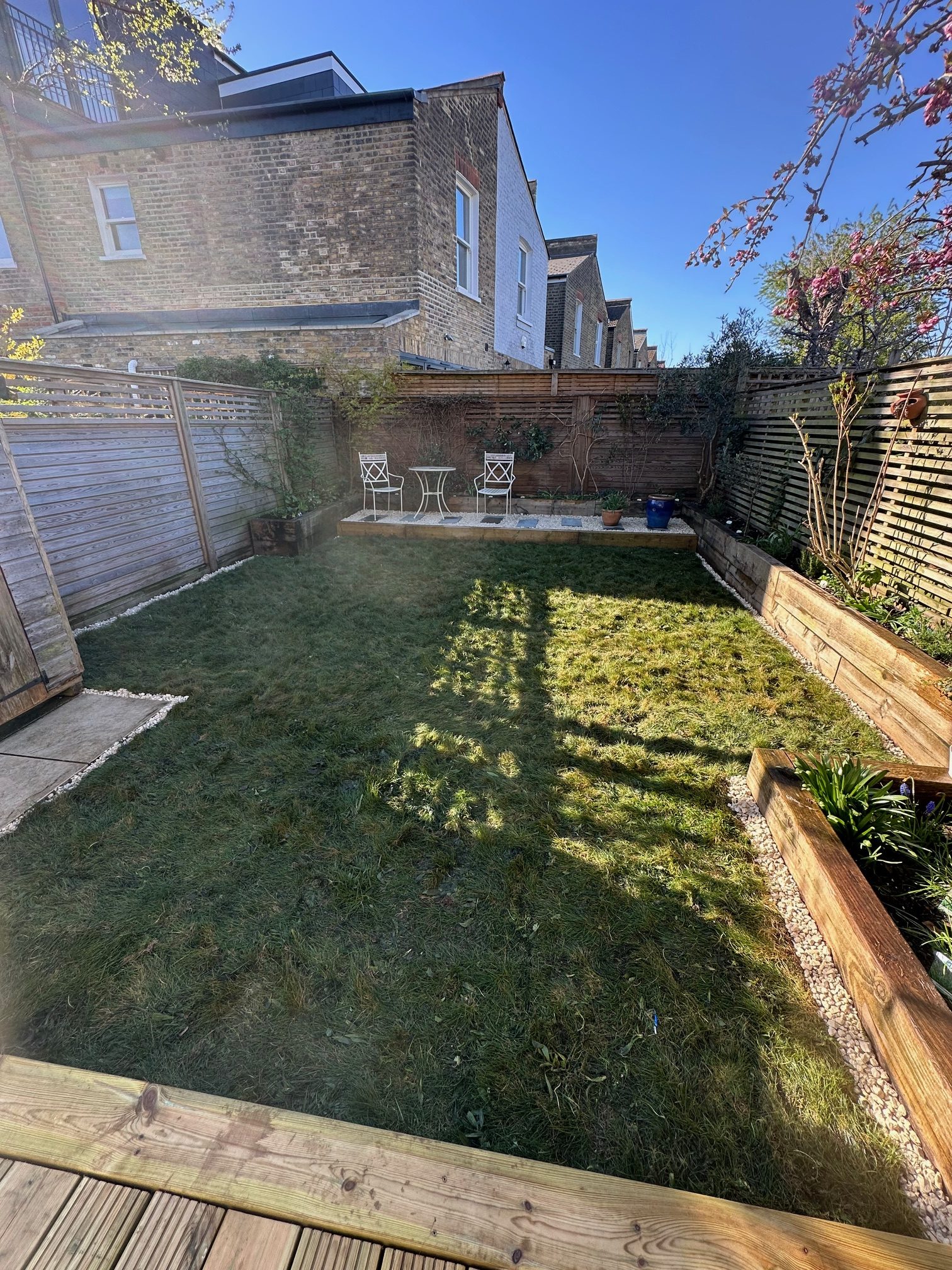
When we began planning this garden transformation, several options were on the table. Yet biodiverse turf quickly emerged as the clear winner for this project. Here’s why we made that choice:
- Environmental Integrity: First and foremost, biodiverse turf aligns perfectly with our natural gardening philosophy. While artificial grass claims to be low-maintenance, it’s fundamentally at odds with creating truly sustainable gardens. Biodiverse turf actively contributes to the environment rather than depleting it, supporting our commitment to recycling and waste reduction.
- Resilience in London’s Climate: London’s weather is becoming increasingly unpredictable, with periods of intense rainfall followed by extended dry spells. Biodiverse turf handles these extremes better than conventional lawns. The diverse root systems create channels in the soil that improve drainage during downpours, while also reaching deeper to access moisture during dry periods. This resilience means less intervention and more reliable results.
- Wildlife Support: The decline in insect populations, particularly pollinators, is a serious concern in urban areas. The wildflower component of biodiverse turf provides essential food sources throughout the growing season. These small wildlife havens create stepping stones across the urban landscape.
- Practical Longevity: Unlike conventional turf that often struggles in London’s challenging conditions or artificial grass that deteriorates over time, biodiverse turf actually improves with age. As the plant community establishes and evolves, it becomes increasingly self-sustaining. The diverse species ensure that regardless of the specific conditions—shade, partial sun, heavier soil—something in the mix will thrive.
- Sensory Experience: Gardens should engage all the senses, not just serve as visual backdrops. The subtle movement of different grass species in the breeze, the delicate scent of wildflowers, and the gentle rustle underfoot create a multisensory experience that static surfaces simply cannot match. This living carpet changes throughout the seasons, connecting garden users to natural cycles and creating a more meaningful outdoor space.
Beyond these primary reasons, we’ve found that biodiverse turf sparks curiosity and conversation. Visitors invariably ask about the different species they spot, creating natural opportunities to discuss sustainable gardening approaches. This educational aspect shouldn’t be underestimated—each installation becomes an ambassador for natural gardening principles.
Why Biodiverse Turf Works in London Gardens
London gardens face unique challenges – heavy clay soils, pollution, unpredictable rainfall, and limited space. Biodiverse turf tackles these issues head-on:
- The deeper root systems of diverse plant species improve soil structure, breaking up London’s notorious clay
- Multiple plant varieties mean something will thrive regardless of the micro-conditions in different parts of your garden
- Reduced need for watering compared to conventional lawns once established
- Creates small wildlife corridors in our fragmented urban landscape
- Performs well in partial shade, a common feature of London’s garden spaces
- Helps mitigate urban flooding by improving drainage and water absorption
Installation Made Simple
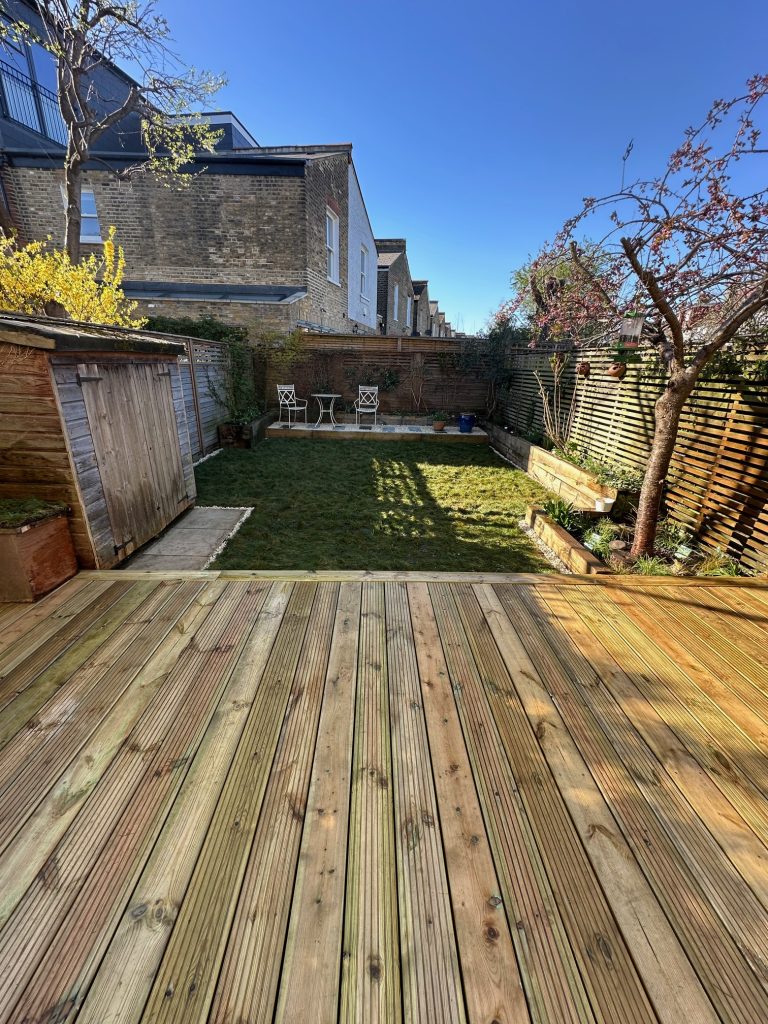
The process of laying biodiverse turf isn’t significantly different from conventional turf, but attention to detail matters:
- We prepared the ground thoroughly, removing all traces of the artificial grass and its base layers, which included lifting the membrane that had been preventing natural drainage
- We improved the existing soil with organic matter to give the new turf a healthy start and encourage rapid root establishment
- We ensured the soil surface was firm but not compacted, raked level, and free from stones and other debris
- Rolls were laid immediately upon delivery – this is crucial as biodiverse turf needs to be installed within 24 hours in autumn/winter and immediately in spring/summer to prevent deterioration
- Each 1m² roll was laid with edges butted tightly together, staggered in a brickwork pattern to prevent obvious joins
- We used sharp knives to cut the turf where necessary, ensuring clean edges that would knit together quickly
- We watered thoroughly after installation and maintained consistent moisture for the establishment period, which typically takes 2-3 weeks depending on weather conditions
One critical aspect of the installation was timing. While conventional turf can be laid year-round (except during frost), biodiverse turf establishes most successfully when installed during the growing season. We timed our project for early spring, giving the diverse plant species the opportunity to root deeply before summer.
Maintenance: Less Work, More Wildlife
One of the most appealing aspects of biodiverse turf is its minimal maintenance requirements, especially when compared to both conventional lawns and the unexpected upkeep needed for artificial alternatives.
You can either leave it to grow naturally for a meadow-like appearance or trim it to a minimum height of 35mm (1.5 inches) – significantly higher than conventional lawns. If you choose to cut it, collect the clippings to prevent smothering the diverse plants beneath.
The turf naturally suppresses many weeds, eliminating the need for herbicides. Its varied root structure also means it’s more drought-resistant than monoculture lawns, reducing watering needs during London’s increasingly dry summers.
Seasonal maintenance follows a simple rhythm:
- Spring: Allow the turf to grow and flower, providing early nectar for pollinators
- Summer: Cut once in late July/early August if desired, after wildflowers have set seed
- Autumn: A final cut in late September/early October if a tidier winter appearance is preferred
- Winter: Leave undisturbed to protect overwintering insects and soil life
This schedule requires significantly less time and resources than conventional lawns, which typically need mowing every 7-10 days during the growing season. It also eliminates the need for fertilizers, weed killers, and routine aeration that traditional lawns often demand.
Cost Considerations: Value Beyond Price
While the initial installation cost of biodiverse turf is comparable to high-quality artificial grass, the long-term economics tell a different story. Artificial turf typically needs replacement every 8-12 years, whereas a well-established biodiverse lawn can last indefinitely, regenerating naturally over time.
The resource costs extend beyond financial considerations. Artificial grass production is energy-intensive and petroleum-based, with significant carbon emissions associated with both manufacturing and disposal. Biodiverse turf, by contrast, actively reduces carbon, with the diverse plant species capturing CO₂ and storing it in plant tissues and soil.
Maintenance costs for biodiverse turf are also substantially lower over time. Without the need for frequent mowing, there’s reduced fuel consumption and machinery wear. The elimination of fertilizers, pesticides and herbicides further reduces both financial outlay and environmental impact.
Seasonal Changes: A Garden That Evolves
One of the most delightful aspects of biodiverse turf is how it transforms throughout the year. Unlike artificial grass, which maintains the same appearance regardless of season, our biodiverse installation reveals new characteristics as the months progress.
In early spring, shorter species like daisies begin to flower, creating a subtle constellation of white stars against the green background. As temperatures rise, different wildflowers take their turn, with species like Bird’s-foot Trefoil adding splashes of yellow, and Red Campion contributing rich pink tones.
By high summer, the grasses themselves add texture and movement, with their seedheads catching the evening light. In autumn, the changing colours create a warm tapestry as some species prepare for dormancy, while others continue to provide late-season interest.
Even in winter, the structure of the turf offers visual appeal, with some grasses providing height and movement, and frost highlighting the delicate architecture of dormant plants. This constant evolution creates a more engaging garden experience, connecting visitors with natural cycles and seasonal changes.
A Natural Choice for Southwest London
For gardens in Wandsworth, Twickenham, Richmond and beyond, biodiverse turf represents a practical step toward more sustainable urban spaces. It aligns perfectly with our commitment to natural gardening principles and our work recycling garden waste.
By choosing biodiverse turf over artificial alternatives, you’re not just creating an attractive garden feature. You’re establishing a living ecosystem that supports local wildlife, improves soil health, and contributes to a more resilient urban environment.
Is Biodiverse Turf Right for Your London Garden?
While biodiverse turf offers numerous benefits, it’s not a one-size-fits-all solution. Gardens with very heavy shade, extremely poor drainage, or areas subjected to intensive foot traffic might need different approaches or additional preparation.
That’s why we always begin with a thorough site assessment, considering factors like:
- Current soil conditions and drainage
- Light levels throughout the day
- Patterns of garden use and activity
- Surrounding landscape and plant communities
- Specific goals and preferences of the garden owners
This attention to detail ensures that our recommendations are tailored to the unique conditions of each garden we work with.
Ready to transform your garden with biodiverse turf or explore other natural gardening approaches?
Get in touch to discuss how we can create a sustainable, natural space that works with London’s conditions, not against them.
Our team brings over 50 years of combined experience to every project, ensuring results that look beautiful today and continue to thrive for years to come.