

Head outside, pick a spot near the middle of your lawn and crouch down. If healthy grass outweighs the weeds, moss and bare soil across the whole garden, you can rescue it. Once weeds, moss, bald patches and lumpy ground cover more than half the area, you’ll save yourself time and frustration by laying a new lawn.
That rule settles most gardens. Real lawns blur the line, though. The lush green sweep you admire from the patio can turn out to be clover and moss once you’re down on your knees looking at it. Before you spend a penny on seed or turf, you need an honest read on the grass you already have, and a clear sense of the point where a fresh start earns its higher price.
How to Decide Whether to Rescue or Re-Lay Your Lawn
Test the 50% rule in four or five places rather than one. Include the shady strip under next door’s sycamore and the worn track you take to the shed, because those spots fail first. Kneel, part the blades with your fingers and look at the base. You want fine, upright grass anchored by dense white roots. Count dandelion rosettes, broad dock leaves, clover, spongy moss and bare earth against it.
Colour fools plenty of homeowners. You’ll see moss holding a rich green through a damp London winter, and clover spreading in bright patches all summer. Annual meadow grass passes for lawn grass until it sends up pale seed heads in late spring. In a dry July, it dies back and leaves you with yellow scars. Judge your lawn by the plants growing in it, and forget how it looks from the kitchen window.
With a rough percentage in your head, weigh it against your budget, your free weekends and the date you want to start using the garden.
| Rescue the lawn | Re-lay the lawn | |
| Best when | Over half the lawn is still healthy grass | Weeds, moss or damage cover more than half |
| Typical cost | Low to moderate | Higher (turf, soil, labour) |
| Physical effort | Steady, spread over seasons | Heavy, concentrated over a few days |
| Speed of result | Gradual improvement | Near-instant transformation with turf |
| Ongoing work | Regular feeding, mowing and spot-weeding | Careful watering while it establishes, then normal care |
| Main risk | Weeds creep back if you ease off | Poor ground prep undoes the investment |
The chart below shows how the two routes compare on effort and outlay. Treat it as a rough guide based on typical domestic jobs, not a quote.

Re-laying costs more and works you harder, but it gets you to a usable lawn much faster. That trade-off sits at the heart of the decision.
When to Rescue a Lawn
Low Weed Coverage
A sprinkling of dandelions and a few clover patches won’t sink your lawn. If you can walk the length of the grass and point to the weeds one by one, you’re in rescue territory. The healthy grass around them will fill the gaps once you take the competition away.
Good Grass Base
Roots matter more than looks. Tug a small clump: if it resists and you see dense white roots, your lawn has a foundation worth keeping. Thin areas can be overseeded, but a strong existing sward does most of the heavy lifting for you, and it saves you stripping out something that still works.
Lower Cost
Rescue materials come cheap next to rolls of turf and tonnes of topsoil. A bag of seed, some lawn feed, a sack of top-dressing and perhaps a day’s hire of a scarifier will cover most suburban gardens. You pay with your time instead, spread across a season or two.
Step-by-Step Recovery
Rescue rewards patience. You’ll see improvement within weeks of feeding and weeding. A lawn that genuinely looks new usually takes a full growing season, and some homeowners enjoy watching it come back to life.
How to Rescue Your Lawn
Clear Debris
Rake up leaves, twigs, the forgotten football and anything else smothering the surface. Grass under debris goes yellow fast, and you can’t treat what you can’t see. A quick rake also shows you where the real trouble spots are.
Target the Weeds
Big perennial weeds such as dandelions and docks come out best by hand. Use a daisy grubber or a narrow trowel and get as much of the root as you can, because leftover root regrows. If broadleaf weeds have spread across wide areas, a selective lawn weedkiller or a weed-and-feed product takes them out without harming the grass. Read the label, keep children and pets off as directed, and leave mowing for a few days either side of treatment.
Scarify the Lawn
Scarifying drags out the thatch, the matted layer of dead grass and moss that chokes your lawn at soil level. It also pulls up creeping weeds. Expect the lawn to look shocking afterwards, with heaps of brown debris and a thin, scratched surface. That’s normal. Autumn and spring suit this job best, when the grass has enough growing power left to recover.
Aerate the Soil
London’s clay soils compact easily, especially along paths and under the washing line. Aerating punches holes into the ground so air, water and nutrients can reach the roots. A hollow-tine aerator does the best job. A garden fork pushed in every 10 cm or so works on smaller lawns if you have the stamina.
Overseed and Feed
Spread a sandy top-dressing over the aerated lawn and brush it into the holes. It improves drainage and levels small dips. Next, overseed the thin and bare areas with a seed mix that suits your conditions; shade blends for those gloomy corners help a lot. Finish with a controlled-release fertiliser so the new and existing grass gets a steady supply of food rather than one quick spike.
| Rescue step | What it fixes | Best season |
| Clear debris | Smothered, yellowing grass | Any time |
| Target weeds | Dandelions, docks, clover | Spring to early autumn |
| Scarify | Thatch, dead moss, creeping weeds | Spring or autumn |
| Aerate | Compacted, waterlogged soil | Autumn ideally |
| Overseed and feed | Thin patches, weak growth | Spring or autumn |
Maintain the Lawn to Prevent New Weeds
Raise your mower blades. Cutting at roughly 5 to 8 cm lets the grass shade the soil, so weed seeds struggle to germinate and your lawn crowds out newcomers on its own. Mow often, feed in spring and autumn, and pull stray weeds the moment you spot them. Ten minutes on a Sunday morning beats a full rescue every few years.
When to Re-Lay a Lawn
Severe Infestation
Some lawns are past saving. When weeds blanket most of the area, and gardeners often put the tipping point at 70 to 80% for a truly severe infestation, killing weeds one by one leaves you with bare soil and very little grass. You’d spend a year coaxing back a lawn you could replace in a weekend.
Stubborn Weeds
Couch grass, creeping buttercup and deep-rooted perennials that shrug off selective weedkillers make rescue a losing battle. Each time you think you’ve won, they reappear from roots you couldn’t reach. Starting again lets you deal with them properly at ground level.
Severe Structural Damage
Waterlogged hollows, lumpy ground, builders’ rubble just below the surface or soil packed solid by years of football: no amount of seed fixes these. The problem sits underneath the grass, so you have to get underneath to fix it.
When a Total Restart Makes More Sense
Sometimes it comes down to timing. You’re selling the house, hosting a summer party or simply tired of fighting the same patches every year. Fresh turf gives you a finished-looking lawn within days, and if you prepare the ground well, you’ll avoid most of the old problems.
How to Re-Lay and Start Over
Kill the Existing Vegetation
Clear what’s there first. You can strip the old turf with a turf cutter, or treat the whole area with a suitable weedkiller and wait for it to die back before clearing. Skipping this step means old weeds punch straight through your expensive new lawn.
Clear and Prepare the Ground
Dig or rotavate the soil, then pick out stones, roots and any rubble. Work in good-quality topsoil or compost if your ground is heavy clay or thin and sandy. This is the least glamorous part of the job and the one that decides whether your new lawn thrives.
Level the Soil
Rake the surface level, then firm it by walking across it in small shuffling steps, heel to toe. Rake again lightly. You want a firm, even bed with a fine crumbly top, free of the hollows that become puddles every winter.
Lay Turf or Reseed
Turf gives you an instant result. Lay the rolls in a staggered brick pattern, butt the edges tight, and work from planks so you don’t dent the soil. Seed costs much less and lets you pick a precise mix, but it needs weeks before you can walk on it. Both establish best in cool, damp weather, which is why spring and autumn are the favoured seasons.
Establish and Water the New Lawn
New turf needs water every day in dry spells for the first couple of weeks, enough to soak through to the soil beneath. Lift a corner to check that the roots are knitting in. Keep foot traffic off until the turf won’t budge when you tug it. Hold off the first mow until the grass reaches around 8 cm, then take just the tips off with sharp blades.
The South West London Gardener: Lawn Help on Your Doorstep
You don’t have to tackle any of this alone. The South West London Gardener is a friendly, professional landscaping team based in SW18, working with homeowners across South West London. Whether your lawn needs a careful rescue or a complete fresh start, we’ll take an honest look at what’s growing and tell you which route makes sense for your garden and budget.
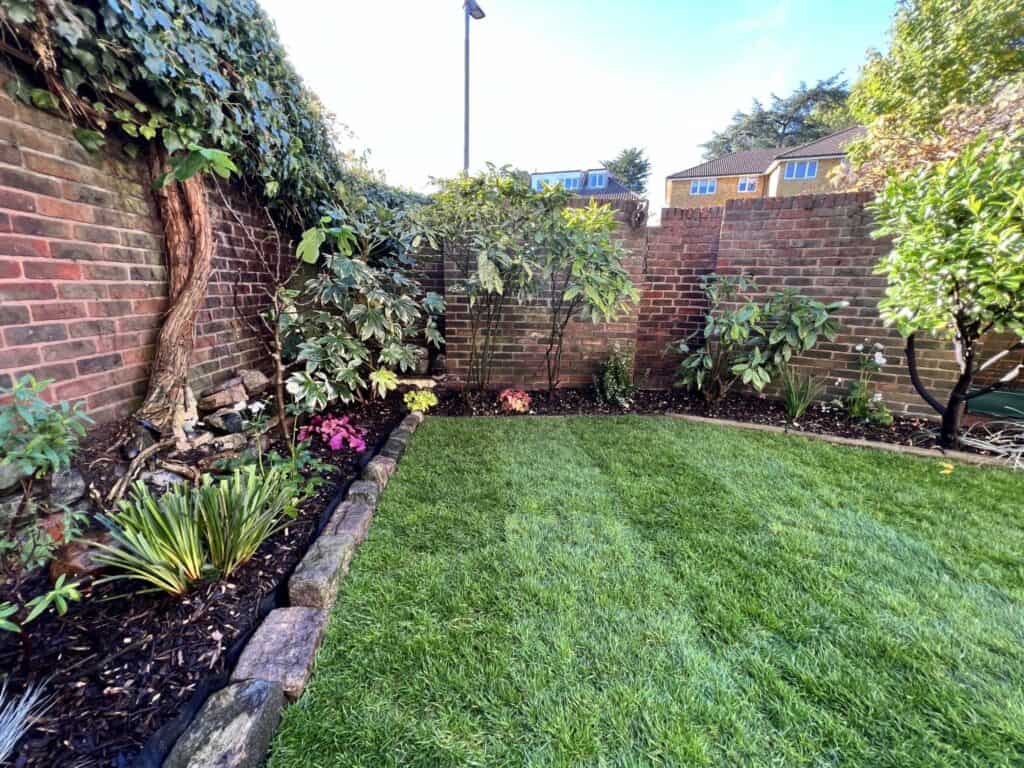
If the 50% test points to a fresh start, our lawn laying service takes care of the heavy work: clearing the old lawn, preparing and levelling the ground, and laying quality turf so you get a lawn worth stepping onto. And if you want more than grass, our soft landscaping team can reshape borders, plant beds and lawn edges around it, turning a tired plot into a garden you’ll want to spend your evenings in.
Get in touch with The South West London Gardener for a lawn assessment, and stop guessing whether your grass can be saved.