
Most people picture spring as the moment for a new lawn. You imagine fresh green rolls going down in April, the smell of cut grass, and the first barbecue already in the diary. We understand the appeal. After years of laying lawns across Twickenham, Richmond, Putney and Wandsworth, though, our team has a quiet favourite season, and it arrives as the leaves start to fall.
October gives a new lawn in a south west London garden the best possible start. The soil still holds the warmth of summer. Autumn rain takes over most of the watering. Your grass then gets a whole winter and spring to root in before anyone asks it to cope with a July heatwave, a paddling pool or a Sunday kickabout.
In this guide, we’ll walk you through the reasons we love laying lawns at the end of the year and the few things that can hold a job up. We’ll also show you how our team prepares and lays a lawn so it lasts. If your garden has heavy clay, bumpy ground or tired artificial grass you’d love to swap for the real thing, you’ll find plenty here for you too.
Your soil is warmer than you think
New turf has one job in its first few weeks: to send roots down into the soil beneath it. Grass roots keep growing as long as the ground stays above roughly 5 to 6°C, and London soil holds onto its summer warmth for longer than most people expect. You might be reaching for a scarf on the November school run while the earth under your feet is still mild enough for roots to push down several centimetres.
Autumn weather helps in a second way. Shorter days and a lower sun mean your turf loses far less moisture than it would in May or June. The edges stay flat and the seams stay tight. You avoid the brown lines that creep between the rolls of a spring lawn after a dry week.
Then there’s the heat. A lawn laid in April can meet its first 28°C afternoon with roots barely a finger’s depth into the soil. Lay that same lawn in October, and it meets summer with six months of growth beneath it, anchored and ready for whatever your family throws at it.
Why October Rain is Ideal for Watering a New Lawn
If you’ve laid turf in late spring, you’ll know the routine. You water at breakfast, water again after work, lift a corner to check for roots, and fret about the strip by the fence that has started to fade. A weekend away can cost you a whole section of lawn.
Autumn takes most of that off your plate. In a typical London October, you may need to water for the first week or two if the weather stays dry. After that, the rain tends to look after things. We’ll leave you with clear aftercare advice, so you’ll know when to step in with the hose and when to leave your lawn alone.
Fewer hosepipe evenings also mean a smaller water bill if you’re on a meter, and less demand on water supplies in the months that need it most. As natural landscapers, we care about that. Every litre you save on lawn watering is a litre your borders can have next summer.
A lawn ready for the first warm weekend
Think about the months you most want to use your garden. For most of the families we work with, the lawn comes into its own from Easter onwards: children racing round after school, friends over on a Saturday, a blanket and a book on a sunny afternoon.
Lay your lawn in spring, and you’ll spend those first precious weeks shooing everyone off it. Lay it at the end of the year, and it has all winter to knit into the soil. By April, you can mow it, give it a spring feed and let the family loose.
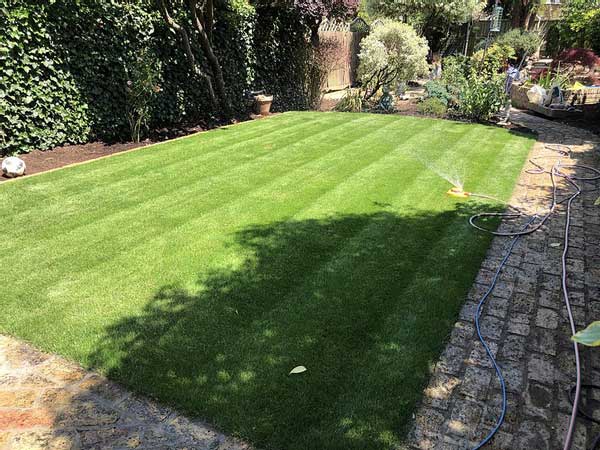
Should You Turf or Seed Your New Lawn at This Time of Year?
Many people weigh up seed against turf to keep costs down, and at the end of the year the calendar makes that choice for you. Grass seed needs soil at around 8 to 10°C to germinate well, so in London you’d want to sow by early October at the latest. Seed sown later tends to come up slow and patchy, and the local birds get a generous free meal along the way.
Turf skips the germination stage altogether. You’re laying grass that has already grown, so all it needs to do is root, and roots keep working in cool soil long after seed has given up for the year. From mid-October onwards, turf gives you the more reliable result.
Seed still has a place in our toolkit. It costs less per square metre and offers a wider choice of mixes, from tough family blends to shade tolerant grasses for those dark corners under a neighbour’s tree. If seed suits your budget better, we can prepare your ground over the winter and sow next September. We also love talking to clients about biodiverse turf, which mixes wildflowers and a far wider range of plants into your lawn and gives pollinators something to visit.
What Weather Stops Us From Laying Lawns in London
October and November are the sweet spot, and in a mild London winter we can often keep laying into December. Two conditions will stop us: frozen ground and waterlogged ground.
Frozen soil can’t be levelled or firmed well, and turf laid on top of it sits idle until the thaw. Waterlogged soil carries the bigger risk, particularly on the clay that runs under much of southwest London. Working wet clay squeezes the air out of it and leaves a compacted layer that drains badly for years. If the forecast turns, our team will talk to you about moving your date by a week or two. We’d much rather wait for good conditions than hand you a lawn that struggles from day one.
Once your new lawn is down, keep off it on frosty mornings. Frozen grass blades snap underfoot and leave dark footprints that can linger for weeks. Turf growers also pause harvesting during hard frosts and heavy rain, so booking early in the season gives you the widest choice of dates.
Clay, Bumps and Tired Artificial Grass
If you’ve laid a lawn before and watched it fail, the trouble usually sits underneath. Heavy clay bakes hard in summer and holds water through winter, so turf rolled straight onto it struggles in both seasons. Our team breaks up the compacted top layer, works in grit and good organic matter, then levels and firms the ground so you don’t end up with puddles and dips. Autumn gives us the time to do that groundwork well, without racing the summer heat.
Bumpy gardens benefit in the same way. Lumps and hollows tend to come from poor levelling the first time round, or from soil settling after building work. A new lawn gives you the chance to fix the levels for good, and the cooler months let the ground settle before a summer of use.
The end of the year is also a popular time to swap artificial grass for the real thing. Plastic lawns get hot, tired and smelly after a few summers, they shed microplastics, and the soil beneath them has often gone without air or life for years. We’re proud supporters of the Society of Garden Designers’ Say No to Plastic Grass and Plants campaign, and we’d love to help you bring your garden back to life. We’ll lift the old surface, treat and enrich the soil underneath, and lay living turf in time for spring. Our guides to removing artificial grass and eco friendly alternatives to artificial grass go into more detail.
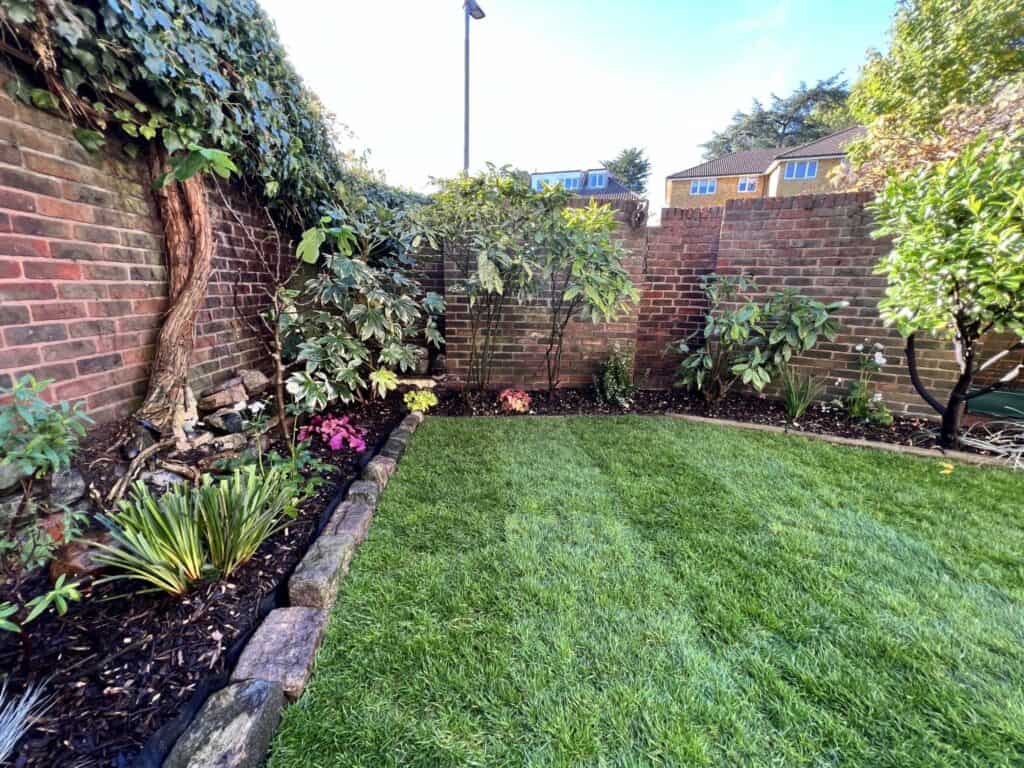
Small Gardens and Access Through the House
Many of the lawns we lay sit behind terraced houses, where the only way into the garden runs through the hallway and kitchen. Our team lays protective sheeting along the route, carries turf and soil through in manageable loads, and takes the waste out the same way. Autumn helps here too. In cool weather, turf rolls stay fresh for longer after delivery, so we can work at a steady pace through a narrow house without watching rolls yellow on the pavement in the midday sun.
Small spaces deserve the same care as large ones. A 20 square metre lawn behind a Battersea terrace gets the same groundwork, the same quality of turf and the same attention to levels as a big family garden in Richmond. If you’ve been wondering whether your garden is too small to bother a professional with, please get in touch anyway. We enjoy those jobs just as much.
How We Lay Your New London Lawn
We start every lawn with a conversation. Our team needs to understand how you use your garden before anyone picks up a spade. Does the grass need to survive football and a trampoline? Does it sit in shade for half the day? Would you like something neat and striped, or a softer, wilder look that welcomes the bees? Your answers shape the turf we choose and the way we prepare your ground.
Our own teams carry out the work from start to finish. We clear the old lawn or surface, tackle the weeds, improve and level the soil, lay the turf with tight joins, and firm it down so the roots make good contact with the ground beneath. We look after the waste too. As natural landscapers, we upcycle as much of what we remove as we can and recycle the rest, so your old lawn stays out of landfill.
While we’re with you, it often makes sense to look at what surrounds the lawn as well. A crisp natural edge in timber or reclaimed brick, refreshed borders, or a new plant list for the beds that frame your grass can lift the whole garden. We’ll work with you to choose plants that suit your soil, your light and your lifestyle, and our soft landscaping service covers everything from a single border to a full planting scheme.
Once your lawn is down, we’ll talk you through aftercare, including when to water, when to make the first cut and how to feed it in spring. If you’d rather hand the work over altogether, our maintenance team can keep it looking its best through the year.
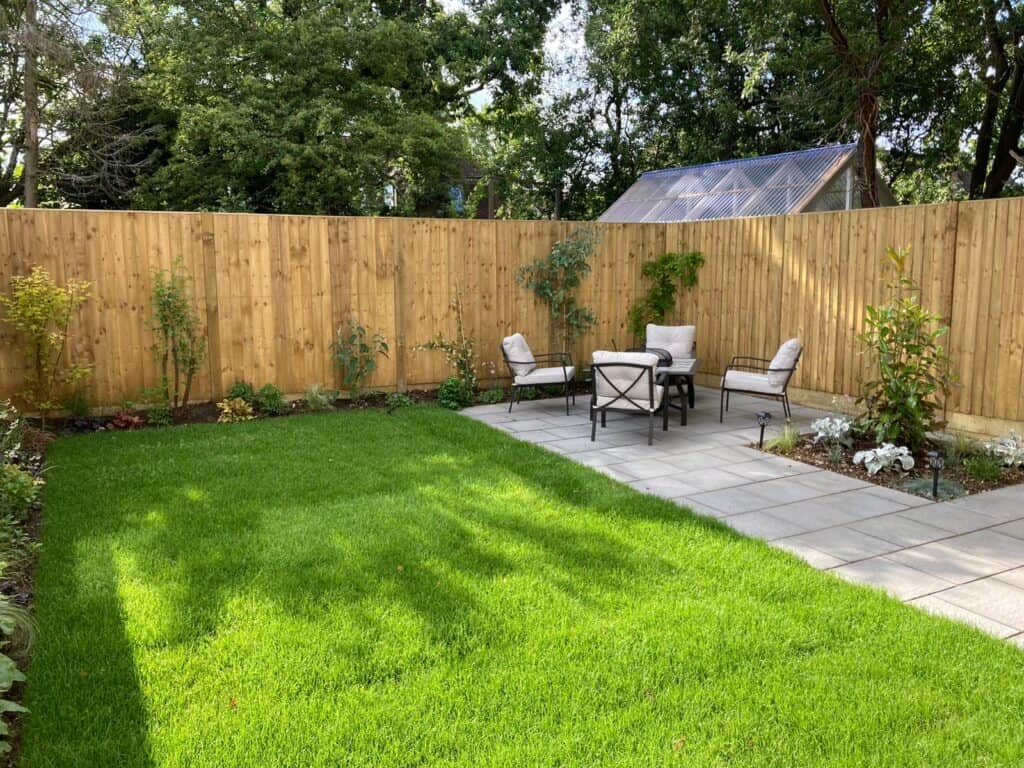
Book your new lawn before winter sets in
Autumn is a busy time for lawn laying, so getting in touch early gives you the widest choice of dates. Send us a few photos of your garden along with its rough measurements, your postcode, and a note on what’s there now, whether that’s patchy grass, bare soil or artificial turf. Let us know how we’d get into the garden too, especially if access runs through the house.
We’ll come back to you with a rough idea of cost, then pop round to see the space, answer your questions and give you a clear, itemised quote. You’ll know what’s included, from preparation and turf to waste removal, before any work begins.
We’d love to help you start next year with a lawn you can’t wait to step out onto. Get in touch with The South West London Gardener to arrange your visit.