
That patch of plastic in the back garden looked great when it went down. Green all year, no mowing, no feeding, no fuss. And then summer arrived and you couldn’t walk on it barefoot. The dog started avoiding it. The colour faded from emerald to something closer to hospital scrubs, and you noticed an odd smell after warm weather that no amount of hosing down seemed to fix.
You’re not the only one. We’ve removed artificial grass from gardens across Wandsworth, Twickenham, Teddington, and beyond, and the reasons people give us are remarkably consistent. The good news is that removing fake turf is a straightforward job, and what you put in its place can transform the way your garden looks, feels, and functions.
Why Remove Artificial Grass?
Heat and Comfort
Plastic fibres absorb and hold heat in a way that real grass never does. On a warm July afternoon in Southwest London, you can fry an egg on some synthetic lawns while the natural grass next door stays cool enough for bare feet. Families with young children find this out the hard way when the play surface they chose for convenience becomes the hottest spot in the garden. Pets refuse to lie on it. You stop using it for the exact purpose it was installed for.
Environmental Problems
A sheet of plastic covering your soil does what you’d expect: it stops rain from draining through, kills the organisms living beneath it, and prevents anything from growing. Earthworms, beetles, and the microscopic life that keeps soil healthy can’t survive under synthetic turf. The weed membrane and compacted aggregate base beneath make the problem worse, creating a sterile layer that can take months of rehabilitation once you finally remove it.
Microplastic pollution is the other issue. Every time you brush or clean artificial grass, tiny fragments of plastic fibre shed into the surrounding soil and wash into waterways. Over a ten or fifteen-year lifespan, a single synthetic lawn releases a surprising volume of microplastics into the local environment.
Maintenance and Lifespan
The “no maintenance” promise never quite holds up. Pet urine soaks into the infill sand and the backing material, and bacteria build up in a way that real soil (which is full of organisms that break organic matter down) handles naturally but plastic can’t. After a couple of years with a dog, many synthetic lawns develop a persistent smell that cleaning products only mask.
Fake turf also degrades. The fibres flatten from foot traffic, the colour fades under UV light, and seams start to lift. Most installations last somewhere between eight and fifteen years before they need replacing, at which point the entire thing goes to landfill because synthetic turf isn’t recyclable through standard waste channels.
How to Remove Artificial Grass
The job breaks down into three phases: getting the turf up, removing the sub-base beneath it, and bringing the soil back to life. You can do this yourself with basic tools, though it’s heavy work and generates a lot of waste material that needs proper disposal.
Clear the Surface and Cut the Turf
Move everything off the grass. Furniture, planters, toys, anything sitting on the surface. Pull out any fixing pegs or staples around the edges. If the turf was glued to a timber or metal edging strip, use a sharp utility knife to cut it free.
Slice the turf into strips roughly 60cm wide using a utility knife. Cutting through the backing takes more pressure than you’d expect, so use a fresh blade and score along a straight edge if you want clean lines. The strips are much easier to handle, roll, and carry than a full sheet.
Lift, Roll, and Remove
Peel each strip back from one end and roll it tightly as you go. Even a narrow strip of synthetic turf is heavier than you’d think, especially if sand infill is still trapped in the pile. Work with someone if you can, because wrestling a rolled-up section of fake lawn through a side gate on your own is the kind of job that makes you question your life choices.
Most councils won’t take artificial grass in household waste collections. Check with your local tip about disposal, or ask us about our green waste removal service, which covers synthetic turf removal and ensures everything goes to the right facility.
Remove the Sub-Base
Under the turf you’ll find a weed membrane, a layer of sharp sand, and beneath that a compacted aggregate or crushed rock base. All of it needs to come out. Shovel the sand and aggregate into bags or a wheelbarrow and clear it to ground level. The membrane peels up in sheets once the weight of the sand is off it.
This is the most labour-intensive part of the job. A typical back garden in Southwest London might have 10 to 15cm of compacted sub-base material under the turf, and it’s dense, heavy stuff. Hiring a small skip makes life considerably easier.
Restore the Soil
What you’ll find beneath the sub-base is compacted, lifeless soil. It’s been starved of air, water, and organic matter for years, and nothing will grow well in it without some work first.
Rotovate or fork the soil over to break up the compaction. Mix in generous amounts of organic compost to reintroduce nutrients and improve the structure. If you’re planning to lay real turf or create planting beds, add 10 to 15cm of quality topsoil on top. London’s heavy clay benefits from this approach even in gardens that never had artificial grass, so you’re investing in the long-term health of the ground.
Give the soil a few weeks to settle before planting or turfing. Rain will work the compost into the structure and the ground will find its natural level.
What to Replace Artificial Grass With
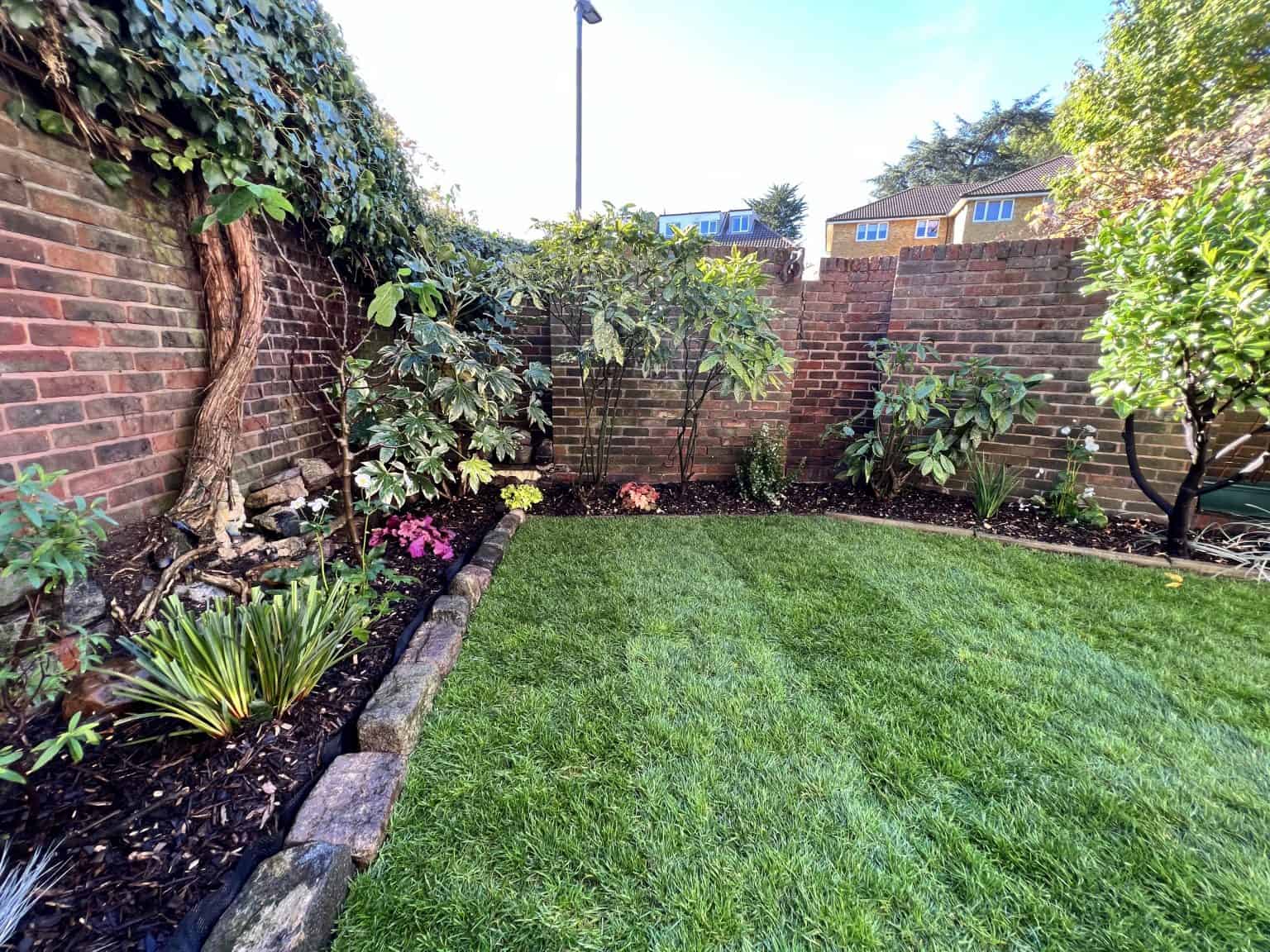
This is where the real opportunity sits. You’ve got a blank canvas and the chance to create something that works with your garden’s natural conditions rather than smothering them. Our natural gardening approach is built around this principle: selecting plants and materials that suit your specific soil, light, and climate so the garden looks after itself with minimal input.
Natural Turf and Biodiverse Lawns
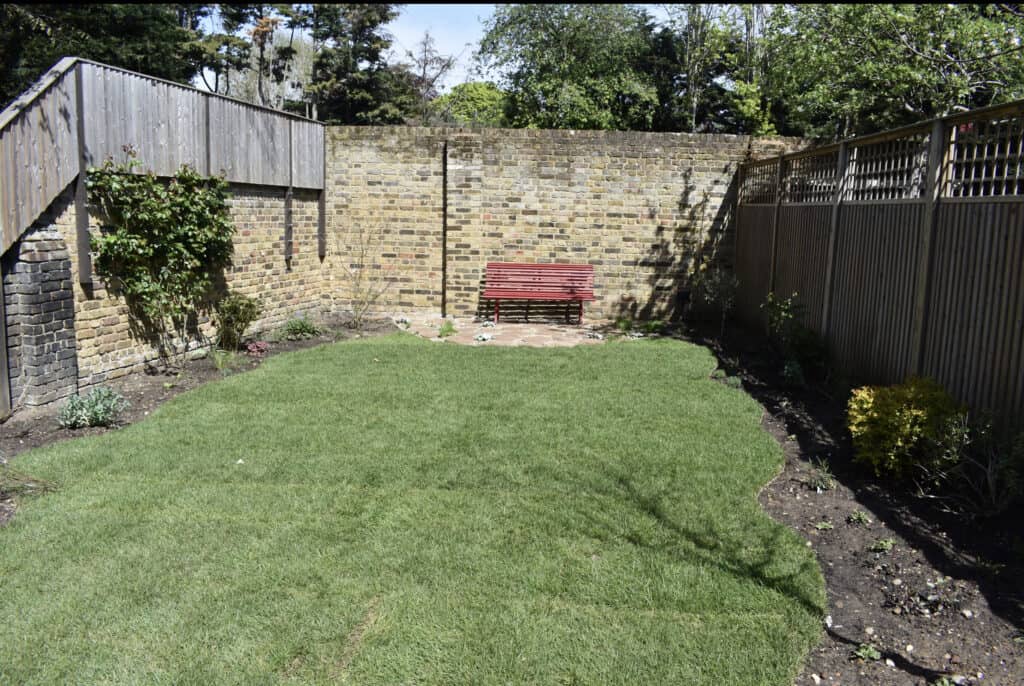
Real grass is the obvious swap. A well-laid lawn on properly prepared soil gives you a cool, soft surface that drains naturally, supports soil life, and smells the way a garden should after rain. It needs mowing, yes, but a weekly cut during the growing season is a small trade-off for a surface that’s comfortable in every season.
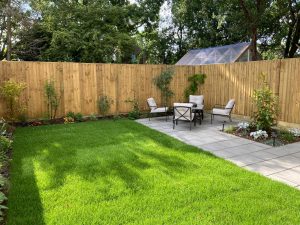
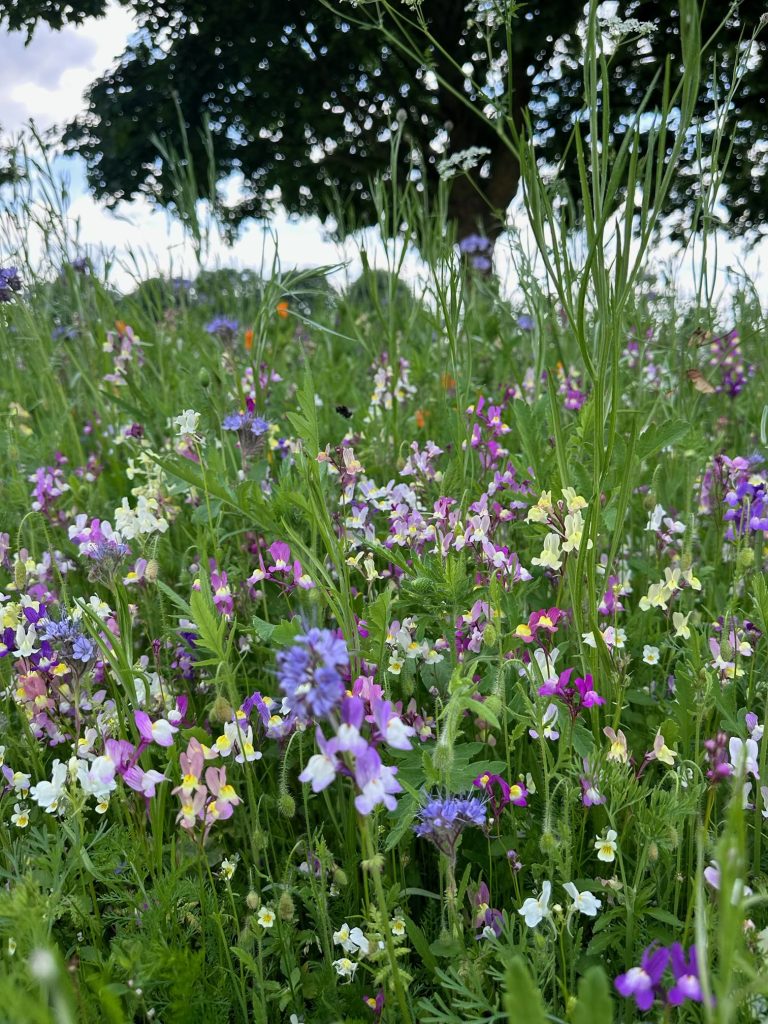
If you want to go further, biodiverse turf is worth considering. We replaced an artificial lawn with biodiverse turf in a recent project, using a mix of 80% grass fescues and 20% native wildflower species including birdsfoot trefoil, common daisy, wild carrot, and yarrow. The result is a lawn that changes through the seasons, supports pollinators, and needs less mowing and feeding than a conventional grass mix because the wildflowers are adapted to low-nutrient conditions.
Wildflower and Native Plant Beds
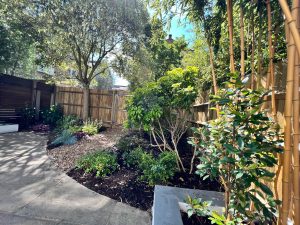
You don’t have to replace fake grass with another lawn at all. Converting the space into planting beds filled with native species creates year-round interest and turns a sterile rectangle into habitat. Native plants suit London’s soil and weather, resist local pests without chemical intervention, and attract bees, butterflies, and birds.
Improve the soil with compost, plant densely to suppress weeds, and mulch between the plants. Within two growing seasons, you’ll have a border that looks established and needs very little from you beyond an annual cut-back.
Gravel, Permeable Paving, and Low-Maintenance Options
Not every garden needs more planting. If you want an outdoor entertaining space or a low-maintenance area, permeable gravel or paving laid on a proper sub-base gives you a hard surface that still allows rainwater to drain into the soil beneath. The drainage matters because sealed surfaces (including artificial grass, ironically) contribute to localised flooding by pushing rainwater straight into the storm drains rather than letting it soak away.
A living patio takes this further. Lay permeable paving with wider joints and plant creeping thyme, chamomile, or mind-your-own-business into the gaps. You get a firm walking surface that softens over time as the plants spread, releasing scent when you step on them.
Mulched Borders
The simplest replacement is a thick layer of bark mulch over prepared soil with a few well-chosen shrubs and perennials. Mulch suppresses weeds, holds moisture, and breaks down gradually to feed the soil. It’s the closest thing to a truly low-maintenance living garden, and it looks better with every passing year as the plants fill in and the mulch weathers to a natural colour.
Benefits of Removing Artificial Grass
The improvements start on the day you pull the plastic up. Soil organisms begin recolonising the ground within weeks once air and water can reach them again. Earthworms return. Beetles, spiders, and ground-nesting insects find a home. The food chain that starts in healthy soil extends upward to birds and hedgehogs, and your garden becomes part of the local ecosystem rather than a dead zone.
Ground temperature drops too. A real lawn or planted bed stays cool through the warmest months because plants release water vapour through their leaves, a process that cools the surrounding air. Your garden becomes a space you can use on the days you need it most.
Drainage improves because living soil absorbs and filters rainfall rather than shedding it. And you stop sending microplastics into the environment every time it rains or you sweep the surface.
How The Southwest London Gardener Can Help
We’ve removed artificial grass from gardens across Southwest London and know the process inside out. From cutting and rolling the turf, to excavating the sub-base, to rehabilitating the soil and designing what replaces it, we handle the entire job. Our team designs and builds with natural, sustainable principles at the centre of every project, and in 2024 we recycled over 11 tonnes of garden waste that would otherwise have gone to landfill.
Whether you want a soft landscaping refresh with native planting, a full garden makeover, or a biodiverse lawn that changes with the seasons, the first conversation costs you nothing. Get in touch, and we’ll talk you through the options.