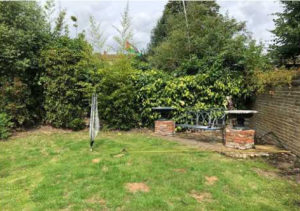

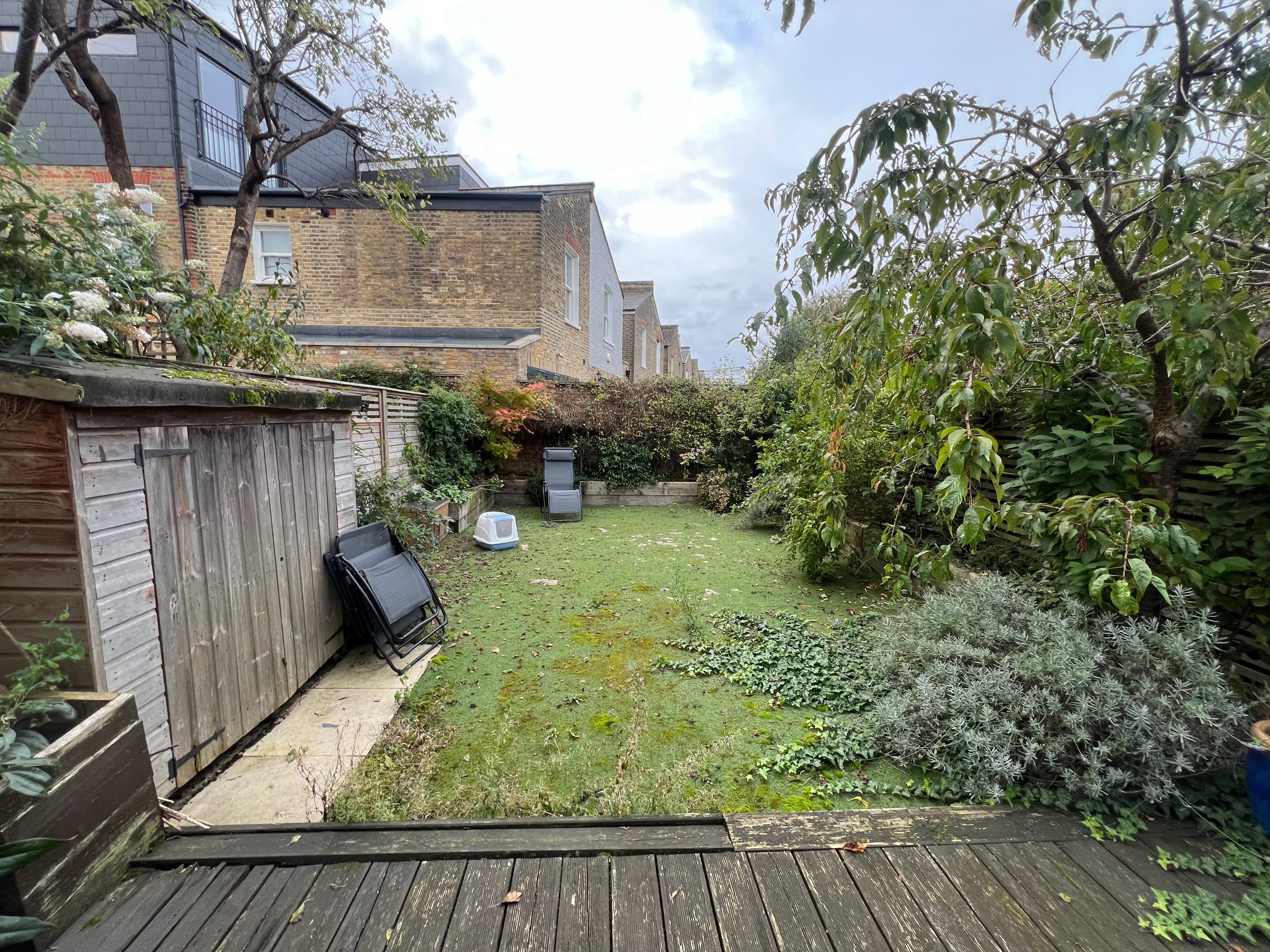
Every garden makeover starts somewhere, and it’s rarely a blank canvas. Most of the time, you’re standing at your back door looking at a space that’s got something going on, just not what you want. Maybe it’s a jungle of brambles that swallowed the patio three summers ago. Maybe it’s a perfectly fine lawn that just bores you. Or maybe you’ve just moved into a new place and inherited someone else’s idea of landscaping.
Here’s the thing: whatever state your garden is in right now, that’s a completely normal starting point. We’ve transformed hundreds of gardens across Southwest London, and almost every single one falls into a handful of familiar categories. Knowing which one you’re dealing with makes the whole process feel a lot less overwhelming because there’s a clear path forward from each one.
This guide walks you through the five most common garden starting points we see, what’s really going on beneath the surface, and how to think about turning each one into something you’ll genuinely enjoy spending time in. You might recognise your own garden straight away. And if you see a bit of yourself in more than one? That’s completely normal too.
The goal here isn’t to hand you a rigid plan. It’s to help you see where your garden sits right now so you can start imagining where it could go. Whether you’re after a full redesign or just want to reclaim a space that’s gotten away from you, the starting point matters because it shapes everything that comes next.
Garden 1: The Overgrown Garden: When Nature Has Taken the Reins
There’s a moment when an overgrown garden stops being “a bit wild” and becomes genuinely intimidating. You know the one, where the hedge has doubled in height, the borders have merged into one tangled mass, and something woody you can’t identify has started pushing through the fence panels. It creeps up on you. One missed season of maintenance turns into two, life gets busy, and suddenly you’re looking at a space that feels more like a nature reserve than a back garden.
The good news? Overgrown gardens are often hiding some of the best bones underneath. Mature trees, established shrubs, and solid hardscaping that just needs clearing are usually in there somewhere. There’s typically far more to work with than you’d expect. The trick is knowing what to keep and what to cut back hard or remove entirely. Not every overgrown plant is a problem. Some just need a proper prune and a bit of breathing room to look incredible again.
Where to Start With an Overgrown Garden
Your first instinct might be to go at everything with a hedge trimmer and a skip, and honestly, we get it. But a more strategic approach saves you from accidentally removing something valuable. Start by identifying what’s actually planted versus what’s self-seeded. That “weed tree” growing behind the shed might be a self-sown birch that could become a gorgeous feature with some crown-lifting. The mass of green covering the back wall could be a mature wisteria that just needs training.
A proper clearance in stages works best. Cut back the obvious overgrowth first. Once you can actually see the ground and the existing structure, you’re in a much better position to decide what stays and what goes. We’ve uncovered beautiful old brick paths, forgotten raised beds, and even ponds during overgrown garden clearances. Your garden might have a few surprises waiting too.
Dealing With What’s Underneath
Here’s something a lot of people don’t think about: years of overgrowth changes the soil. Layers of decomposing leaves and organic matter can actually create beautifully rich earth in places, but compacted areas under dense growth might need proper conditioning. Tree roots can shift paving, ivy can damage mortar, and ground elder can establish networks that take real persistence to clear. Understanding the soil and root situation before replanting means your new garden starts on solid ground, quite literally.
Garden 2: The Bare or Unused Garden: All Potential, No Direction
This one’s surprisingly common. You’ve got a garden. Technically. It’s got a fence around it and probably some patchy grass or bare earth, maybe a single sad concrete slab pretending to be a patio. The builders finished up, moved on, and left you with a rectangle of possibility that somehow feels harder to deal with than an overgrown mess.
The psychological block with a bare garden is real. When there’s nothing to react to, no plants to assess and no layout to tweak, the sheer number of options can freeze you in place. Where do you even put a border? How big should the lawn be? Do you even want a lawn? It’s a blank page, and blank pages are notoriously difficult.

Turning a Blank Space Into a Garden That Works for You
What helps most with a bare garden is thinking about how you’ll actually use the space before thinking about how it’ll look. Do you need somewhere for kids to run around? Space for a table where you’ll eat outside on summer evenings? A quiet corner where you can sit with a coffee on weekend mornings? Function first, aesthetics second, because that’s the order that produces gardens people actually love rather than ones that just look nice in a photo.
Once you’ve got a sense of the zones you need, the layout starts to fall into place naturally. A seating area close to the house with good access to the kitchen. A play area visible from the window. Planting beds along boundaries for privacy and colour. The design starts making its own decisions for you once you’ve nailed down the practical priorities.
Garden 3: The Dated Garden: Structurally Sound, Stylistically Stuck
You know this garden. You might even quite like it, in a way. The layout works fine. There’s a lawn, some borders, a patio. Nothing’s broken or overgrown. It’s just stuck somewhere around 1997. Orange-toned gravel. Concrete slabs with pebble aggregate. A rockery that nobody asked for. Maybe some decking that’s gone silvery-grey and slippery.
Dated gardens come with a unique challenge: they’re functional enough that it’s hard to justify tearing everything out, but tired enough that you never really enjoy being out there. The temptation is to just keep maintaining what exists because a full redesign feels like overkill.
Knowing What to Refresh and What to Replace
The best approach with a dated garden sits somewhere between full renovation and cosmetic tweaking. Hardscaping is usually where the most dramatic difference happens. Replacing tired paving with modern porcelain tiles or natural stone can transform the feel of the entire garden in a single change. If the patio’s in good structural condition but just looks old, sometimes re-pointing and power-washing is enough, though be honest with yourself about whether that’ll actually make you happy or just delay the real update.
Planting is often the easier fix. Ripping out a monoculture laurel hedge and replacing it with mixed native hedging, or swapping regimented bedding rows for naturalistic perennial planting, can shift the whole character of a garden without touching the layout. The bones stay. The personality changes.
Garden 4: The “It’s Fine” Garden: When Good Enough Isn’t Good Enough
This is perhaps the trickiest starting point to act on because there’s nothing obviously wrong. The garden looks OK. It’s reasonably maintained. You mow the lawn, maybe trim the hedge once a year. But you never actually choose to spend time out there. You look at it through the window and feel nothing. No pull to go outside with your morning tea, no urge to potter around on a Saturday afternoon. It’s just there.
The “it’s fine” garden often suffers from a lack of intention. Things were planted or placed without a real vision behind them, and the result is a space that functions without inspiring. There’s no focal point drawing your eye. No sense of discovery or layering. The lighting, if it exists at all, is a single security floodlight that makes the whole garden look like a car park after dark.
Small Changes That Create Big Shifts
You don’t always need a complete overhaul to turn an uninspiring garden into one you’re drawn to. Sometimes the garden transformation comes from a few targeted additions. Garden lighting is one of the single most impactful upgrades, because soft, warm LED path lights and a couple of uplighters on a feature tree can make a garden feel like an entirely different space once the sun goes down. You effectively double the hours you’ll enjoy it.
Adding vertical interest is another game-changer. If your garden is flat and one-dimensional, introducing height through an arch, a specimen tree, or even a well-placed large planter can break the visual monotony and create a sense of structure that pulls you through the space. A simple seating area tucked into a corner, surrounded by fragrant planting like lavender or jasmine, gives you an actual reason to step outside, turning it into a destination rather than just a view.
Editing What’s Already There
Sometimes the issue isn’t what’s missing but what’s cluttering things up. A mishmash of pots in different styles, a random collection of ornaments, plants that were impulse buys with no relation to each other, all of these can dilute the impact of your garden. Editing them out and creating a more cohesive look can sharpen a space dramatically. Think of it like tidying a room: you don’t need new furniture, you just need to clear the surfaces and let the good pieces stand out.
Garden 5: The Post-Project Garden: Collateral Damage From Building Work
If you’ve recently had an extension, loft conversion, or any significant building work done, you probably already know what your garden looks like right now, and it’s not pretty. Trampled lawn, stacked materials, a strip of muddy ground where the scaffolding sat for six months. Maybe the skip left a permanent impression on what used to be a flower bed.
Post-project gardens are actually one of the most exciting starting points because your expectations are already reset. You’re not emotionally attached to what was there before since it’s already been destroyed. And often the building work itself has changed the relationship between your house and garden in ways that create new design opportunities. That new extension with bifold doors? It’s begging for a patio that flows seamlessly out from the kitchen. The side return you enclosed means the garden now has a different shape to work with.

Assessing the Real Damage
Before you start planning the dream garden, you need to understand the damage. Check for buried rubble and waste. The soil will almost certainly be compacted from heavy foot traffic and machinery, so it’ll need breaking up and conditioning. Check the drainage too, as building work can disrupt existing drainage patterns and leave you with waterlogging issues that weren’t there before.
Any surviving plants may be stressed from dust, soil compaction around their roots, or physical damage. Give them a season to recover before deciding whether they’ll bounce back. You might be surprised because plants can be remarkably resilient once the construction chaos ends and they get a bit of care.
Making the Most of a Fresh Start
The silver lining of a post-project garden is that you’re essentially designing from scratch, but with the advantage of a house that’s already been updated. You can create a garden that connects properly with your new indoor spaces, matches the style of your renovation, and functions the way your household actually lives now. It’s the rare occasion where destruction leads directly to opportunity, so you might as well make the most of it.
Ready to Figure Out Your Garden’s Next Chapter?
Whatever category your garden falls into, and plenty fall into a blend of two or three, recognising where you’re starting from is the first step toward a space you’ll actually want to use. Every one of these starting points leads somewhere brilliant with the right approach, whether that’s a targeted refresh or a complete ground-up transformation.
At Southwest London Gardener, this is what we do every day. We walk into gardens and we see the potential hiding in every overgrown corner, bare patch, and dated patio. We’ve worked with all five of these starting points, and we know how to navigate each one efficiently, protecting what’s worth keeping, clearing what isn’t serving you, and building something that genuinely fits your life.
If you’re looking at your garden and thinking “yeah, that’s mine” about any of these descriptions, get in touch. We’ll come and take a look, talk through what’s realistic for your space and budget, and give you a clear idea of what’s possible. No pressure, no hard sell, just honest advice from people who’ve done this a lot and still get a kick out of watching a garden come together.
Your garden’s starting point is just that, a starting point. What matters is where it goes from here.