
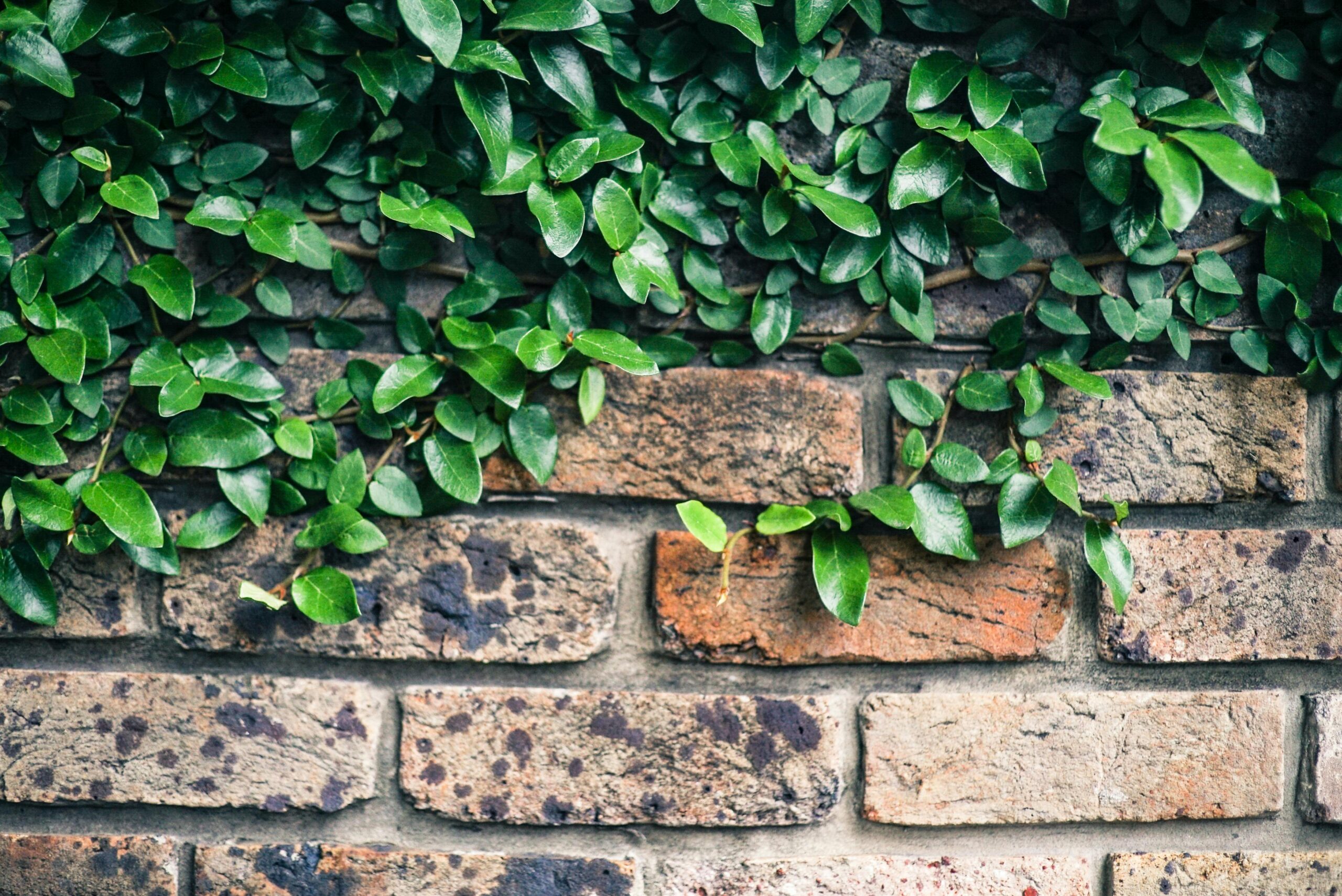
Every garden has walls – boundary walls, retaining walls, or those stark brick surfaces that aren’t always the most appealing on the eye.
Rather than viewing them as obstacles, we’ve learned to see garden walls as vertical opportunities waiting for the right natural treatment. After years of transforming bare walls across Southwest London, we’ve discovered that the most effective approaches work with the wall’s existing characteristics whilst creating living, breathing focal points.
This falls into our natural gardening ethos, and is something we love to add to our garden projects, and we’ve created this blog to tell you more.
Let’s take a look.
Why Natural Wall Coverage Matters
Garden walls present unique challenges that artificial solutions simply can’t address effectively. Harsh materials like concrete or brick create microclimates that can be significantly warmer or cooler than surrounding areas. They reflect heat, cast sharp shadows, and often feel disconnected from the garden’s natural flow.
Natural coverage transforms these stark surfaces into integrated garden features that support local wildlife whilst improving your outdoor environment. Living walls help regulate temperature extremes, reduce noise pollution, and create habitat corridors that connect different areas of your garden. The visual impact is immediate – instead of a hard boundary, you have a living backdrop that changes with the seasons.
We’ve found that natural wall treatments require less maintenance than painted surfaces or artificial cladding once established. Nature does most of the work for you, and the results improve over time rather than deteriorating.
Climbing Plants: The Classic Natural Solution
The most straightforward approach to covering a garden wall naturally involves selecting climbing plants suited to your specific conditions. However, not all climbers are created equal, and choosing the wrong species can create more problems than it solves.
We always assess the wall’s aspect first – south-facing walls receive intense sun and can become extremely hot, whilst north-facing surfaces remain cool and receive limited direct light. East-facing walls get gentle morning sun but avoid afternoon heat, making them ideal for many flowering climbers. West-facing walls endure afternoon sun but benefit from morning shade.
For sunny walls, we often recommend hardy climbers like honeysuckle or jasmine, which provide fragrance alongside coverage. Shady walls suit ivy varieties or climbing hydrangeas that actually prefer reduced light levels. The key is matching the plant’s natural preferences to your wall’s conditions rather than fighting against them.
Living Wall Systems Using Native Plants
Traditional living walls often rely on complex irrigation systems and non-native plants that struggle in our climate. We prefer creating natural living wall systems using native species that can establish themselves with minimal ongoing support.
We build simple pocket systems using natural materials like coir matting or recycled felt, filled with peat-free compost. The structure allows plants to root naturally whilst providing adequate drainage. Native ferns, small grasses, and wildflowers create texture and seasonal interest without requiring complex maintenance schedules.
These systems work particularly well on partially shaded walls where traditional climbers might struggle. The varied plant communities create natural ecosystems that attract beneficial insects whilst providing year-round visual interest.
Natural Screening with Mixed Plantings
Sometimes the most effective wall coverage comes from strategic plantings placed in front of the wall rather than growing directly on it. Mixed borders using native shrubs, ornamental grasses, and seasonal plants create layered screening that feels naturally integrated.
This approach works particularly well with challenging walls where climbing plants struggle to establish. We plant in tiers – tall background shrubs, medium-height perennials, and low-growing ground cover that creates depth whilst gradually obscuring the wall behind.
The beauty of mixed plantings lies in their seasonal variation. Spring bulbs give way to summer perennials, followed by autumn berries and winter structure from deciduous shrubs. The wall becomes a backdrop rather than a focal point, integrating seamlessly into your garden’s overall design.
Bamboo and Grass Screens for Instant Impact
When you need immediate wall coverage, certain bamboo varieties and ornamental grasses provide rapid establishment without the aggressive spreading that gives bamboo a bad reputation. Clump-forming varieties stay contained whilst creating effective natural screening.
We carefully select non-invasive species that suit the specific conditions. Fountain bamboo works well in partial shade, whilst some ornamental grasses thrive in full sun against hot walls. The key is choosing varieties bred for garden use rather than wild species that might become problematic.
These plants provide immediate height and movement, creating privacy whilst establishing much faster than traditional climbers. The rustling sound adds another sensory dimension to your garden, and many varieties look stunning when backlit by low winter sun.
Seasonal Interest: Making Wall Coverage Work Year-Round
The most successful natural wall coverage provides interest across all seasons rather than looking spectacular for a few weeks then disappearing. We design combinations that ensure something attractive is always happening against your wall.
Spring might feature early-flowering clematis or climbing roses, followed by summer jasmine or honeysuckle. Autumn brings coloured leaves and berries, whilst winter reveals interesting branch structures or evergreen foliage. The key is layering different plants with complementary flowering and fruiting times.
Even seemingly boring walls can become year-round features with thoughtful plant selection. The goal isn’t constant colour but rather ensuring your wall coverage contributes positively to your garden’s overall character regardless of season.

Making Natural Wall Coverage Work for You
Natural wall coverage succeeds when it works with your garden’s existing conditions rather than fighting against them. The most dramatic transformations we’ve achieved have come from understanding what each wall naturally wants to support, then selecting appropriate plants and techniques.
Consider your wall’s aspect, the soil conditions at its base, and how much maintenance you’re willing to provide. Some approaches require minimal ongoing care once established, whilst others benefit from annual pruning or seasonal adjustments.
Start with one section and learn what works in your specific conditions before tackling the entire wall. Natural solutions improve over time, and patience in the early stages delivers much better long-term results than rushing to cover everything immediately.
Traditional Hedging as Living Wall Coverage
Sometimes the most effective wall coverage doesn’t actually touch the wall at all. Traditional hedging planted strategically in front of problematic walls creates natural screening whilst providing habitat and seasonal structure. This approach works particularly well when walls are too challenging for climbing plants or when you need immediate privacy.
We often use mixed native hedging rather than single-species approaches. Hawthorn, blackthorn, and field maple create varied textures whilst supporting different wildlife throughout the year. The key is planting close enough to the wall to provide effective screening whilst leaving sufficient space for the hedge to develop its natural shape.
Established hedges require annual trimming but provide decades of reliable coverage. They’re particularly effective for boundary walls where you need privacy but want to maintain a natural garden feel. The seasonal changes – spring flowers, summer foliage, autumn berries, and winter structure – ensure year-round interest.
Natural Trellises and Support Structures
Creating effective support for climbing plants often requires additional structures, but these don’t need to be artificial or intrusive. We build natural trellises using sustainable materials that complement the garden’s overall aesthetic whilst providing practical plant support.
Coppiced hazel or willow creates beautiful, organic support structures that age gracefully whilst supporting climbing plants effectively. These materials are renewable, locally sourced, and develop attractive weathered appearances over time. The informal nature means slight irregularities add character rather than looking like mistakes.
Tensioned wire systems using galvanised steel provide invisible support for heavier climbers like roses or wisteria. The wires disappear behind the foliage whilst providing the structural strength needed for mature climbing plants. We position them to work with the wall’s existing features rather than fighting against awkward angles or textures.
Addressing Specific Wall Challenges Naturally
Different wall types present unique challenges that require tailored natural solutions. Retaining walls often have drainage issues that affect plant establishment, whilst boundary walls might need solutions that work well for neighbours on both sides.
High walls cast significant shade that limits plant options, but this creates opportunities for shade-loving climbers and understory plants that struggle in full sun. We work with these conditions rather than trying to change them, selecting plants that actually prefer reduced light levels.
Crumbling or damaged walls need solutions that don’t add structural stress. Lighter climbers or strategic hedge plantings provide coverage without putting additional weight on compromised structures. Sometimes the most effective approach involves partial coverage that highlights interesting wall features rather than hiding everything.
Maintenance and Long-term Success
Natural wall coverage succeeds when maintenance requirements match your available time and energy. The most beautiful installations fail if they require more attention than you can reasonably provide. We design systems that improve with age whilst requiring minimal ongoing intervention.
Annual pruning keeps most climbing plants healthy and productive, but this becomes a pleasant seasonal routine rather than a constant battle. Established native plantings largely maintain themselves, needing occasional tidying rather than intensive care. The key is choosing appropriate plants and giving them time to establish properly.
Water requirements decrease significantly once natural wall coverage matures. Most native plants and well-chosen climbers become drought-tolerant after their first few seasons, reducing both maintenance time and water costs. Good initial soil preparation pays dividends for years to come.
Creating Wildlife Corridors with Wall Coverage
Natural wall coverage creates opportunities to connect different areas of your garden whilst providing habitat for local wildlife. Climbing plants and hedging act as green corridors that allow birds, beneficial insects, and small mammals to move safely through urban environments.
We select plants that provide food sources throughout the year – spring flowers for early pollinators, summer berries for birds, and seed heads that support wildlife through winter. These choices create beautiful wall coverage whilst contributing to local ecosystem health.
The layered structure of natural wall coverage provides nesting sites and shelter that traditional fencing simply can’t match. Dense base plantings offer ground-level habitat, whilst climbing plants provide vertical nesting opportunities and food sources at different heights.
Here at The Southwest London Gardener, we specialise in natural wall coverage solutions across Southwest London, creating beautiful, wildlife-friendly screens that improve with time. Contact us to discuss how we can help turn your challenging walls into garden highlights.