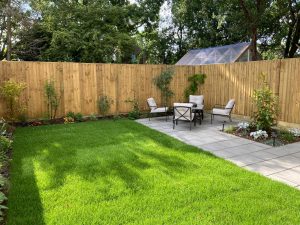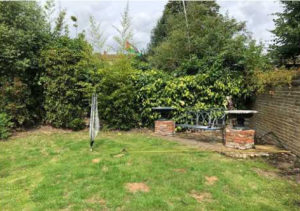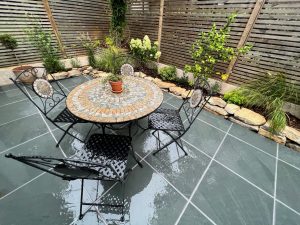


Most south-west London terraces share the same garden problem. A narrow strip behind the house, fences pressing in, neighbours overlooking from above. The plot was never going to be generous because the houses weren’t built for it.
The good news is that small gardens don’t have to feel small. A plot of twenty square metres can feel like a corridor or it can feel like a proper outdoor room, and the difference rarely comes down to budget. Mostly it comes down to a handful of design choices that nobody bothers to mention until you’ve already wasted money on the wrong thing.
What follows are seven techniques that genuinely work in the kinds of gardens you find around Twickenham, Wandsworth, Teddington and the surrounding areas. None need planning permission. Most don’t need a builder. Some are weekend jobs you can knock out yourself, others want a bit more thought and possibly some help. Pick the ones that fit your plot and skip the rest.
1. Focus on the Fences
The fences are doing more damage to your garden than anything else inside it. They’re tall, they’re close, and they’re the first thing you see when you step outside. Get them wrong and the whole space tightens around you.
Paint colour is where the biggest gains happen. Dark stains have been everywhere in design magazines for the last few years, and they look gorgeous in the photos. The reality in a five-metre-wide London plot is different. Black and charcoal pull the boundary towards you and make a small garden feel smaller, not cosier.
Pale colours do the opposite. Soft sage, chalky off-white, dove grey, or a washed-out pale blue all push the fences back and let your eye relax. Cuprinol’s Wild Thyme is the one most local designers reach for because it softens timber without bleaching out in summer. Farrow & Ball’s Mizzle does a similar job at a higher price.
Green is worth a thought too. A deep foliage tone makes the fence disappear behind whatever climbs up it, so your roses and jasmine read as proper features rather than ornaments stuck against a hard backdrop.
Steer clear of anything bright or high-contrast. Cobalt and pillar-box red turn the fence into the loudest thing in the garden, which is the opposite of what you want. The boundary’s job is to recede, not perform.
Practically, repainting fences is a weekend job. Power wash the timber, two coats of exterior wood paint, done. Brick walls need masonry paint over a primer and take a bit longer. Pound for pound, paint on the boundaries probably gives you the best return on investment available.
2. Plant Vertically
Once the borders and pots are full, the only space you’ve got left is on the walls and fences. That vertical surface is where small gardens find their extra room, and a fence smothered in jasmine stops looking like a fence at all.
Star jasmine is the climber to start with. Evergreen, beautifully scented through summer, and happy in the dappled light most terraced gardens get. The London heat island means it survives winters across the south west boroughs without any fuss.
Climbing hydrangea handles the brutal north-facing wall where almost nothing else will grow. It takes two or three years to settle in, then becomes vigorous enough to need regular pruning. Worth the wait if you’ve got that difficult shaded wall.
Need rapid coverage? Clematis montana throws out ten feet of growth in a single season and produces a wall of pink or white blossom by April. Hard to beat for impact in a hurry.
Adding trellis above your existing fence panels is the cheap way to gain height. Standard panels reach six feet, and a slim oak trellis on top brings you to seven or eight without replacing perfectly good timber. Plants spill over the top and create a soft green skyline rather than a hard fence line.
Don’t ignore edibles. Runner beans, French beans, cucumbers, and cordon-trained tomatoes all happily climb given a sunny aspect. Picking dinner off a wall that previously did nothing useful is more satisfying than it has any right to be.
3. Create an Appropriate Garden Design
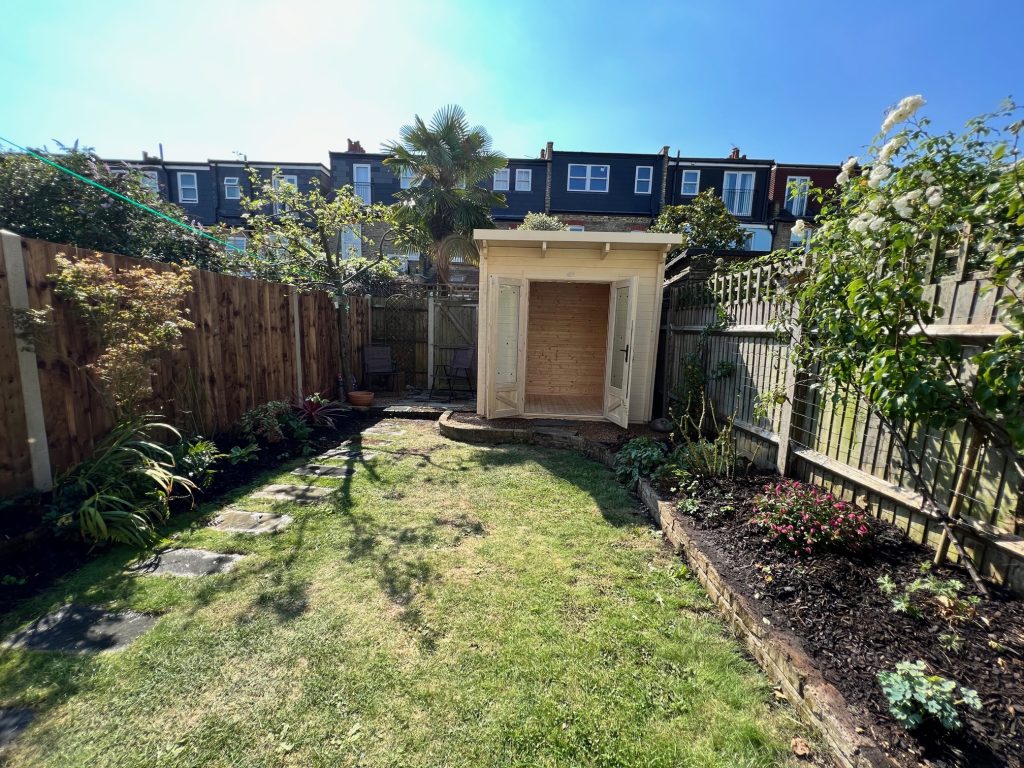
Most failed gardens start the same way. Someone gets excited at the garden centre on a sunny April Saturday, comes home with a car boot full of plants, and starts digging. Six months later the layout’s wrong, the patio sits awkwardly, and half the plants are struggling. You can avoid all of that by sitting down with a tape measure first.
Measuring properly takes an hour and shows you things you’d otherwise miss. Boundaries that look straight turn out to lean. The kitchen extension steals more width than it appeared to. The side return barely sees the sun for six months of the year. Sketch the plot on graph paper or use a free app like iScape so you’ve got an honest record to work from.
The harder question is what you actually want the garden to do. Outdoor dining? Lawn for kids? Vegetables? A reading corner that catches morning sun? You can’t have everything in a small London plot. Picking two main functions and committing to them produces a garden that works. Trying to fit six functions in produces a garden that doesn’t.
Once you’ve decided, the rest follows. Proportions, materials, planting palette, budget priorities, all of it falls into place around those two choices.
If the planning side feels like more than you want to take on, the garden design service at The Southwest London Gardener handles compact plots across the area. Getting it right on paper saves real money long term, because you stop buying things you’ll regret in eighteen months.
4. Split Your Garden Up
Cutting a small garden into smaller sections sounds completely backwards. Surely you want to keep everything as open as possible, let the eye stretch from the back door to the rear fence, maximise the apparent room.
It turns out the opposite works better. A garden you can take in completely from one viewpoint reveals its size in a single glance, and your brain registers it as small. A garden where part of the layout sits hidden from view leaves the brain guessing about what’s beyond, and the brain almost always assumes more rather than less. That guesswork produces the feeling of a generous space that pure measurement won’t support.
Switching surface materials is the simplest way to create zones. Sandstone patio at the house, gravel underfoot leading to a small lawn at the rear. Three distinct areas from materials alone, and the transitions tell your eye you’re moving through different rooms rather than across one rectangle.
Planted dividers do the same job with more elegance. A waist-high border running halfway across, anchored with a multi-stem amelanchier or a clipped box ball, breaks the sightline without slamming a wall through the middle. You see there’s more garden beyond, but not all of it at once, which is exactly where the perception of extra space comes from.
Furniture position matters too. A dining table pushed tight against one side opens up a clear view down the other edge. Centre it and you’ve chopped the visible garden in half. A bench tucked into a corner under climbing roses stops being a seat and starts being somewhere worth walking to.
5. Reflections Are Your Friend
A well-placed garden mirror does something close to magic for almost nothing. Hang it right and you’ve doubled the apparent depth of the garden for the cost of a frame and some wall plugs.
Placement is everything. A mirror facing the seating area reflects whoever’s sitting there back at themselves, which gets uncomfortable fast. Angle it instead to catch a planted border, a climbing rose, or a strip of sky between rooflines, and the reflection reads as more garden. Another bed glimpsed through a doorway. A path leading somewhere unseen.
Antique window frames repurposed as garden mirrors have become a SW London signature, partly because they suit period houses and partly because the slight imperfection in old glass softens the reflection. The vintage shops along Northcote Road throw up usable pieces fairly often, and Battersea car boot is worth a Sunday morning if you’re up early. For something cleaner, a black-framed rectangular mirror at eye level pulls light into shaded corners without committing to a period look.
Quick warning about birds. A perfectly clean mirror placed in clear sight of an open garden occasionally fools them into flying straight at it. Tucking the mirror partly behind planting solves it, as does angling it down rather than mounting it dead-on. Aged glass rarely causes the problem because the reflection isn’t sharp enough to fool wildlife.
North-facing gardens benefit most because they’re starved of light to begin with. A mirror angled to bounce afternoon sun into a darker corner can completely change how the space feels, and plenty of terraces across Wandsworth and Putney have been opened up exactly this way.
6. Use Different Levels
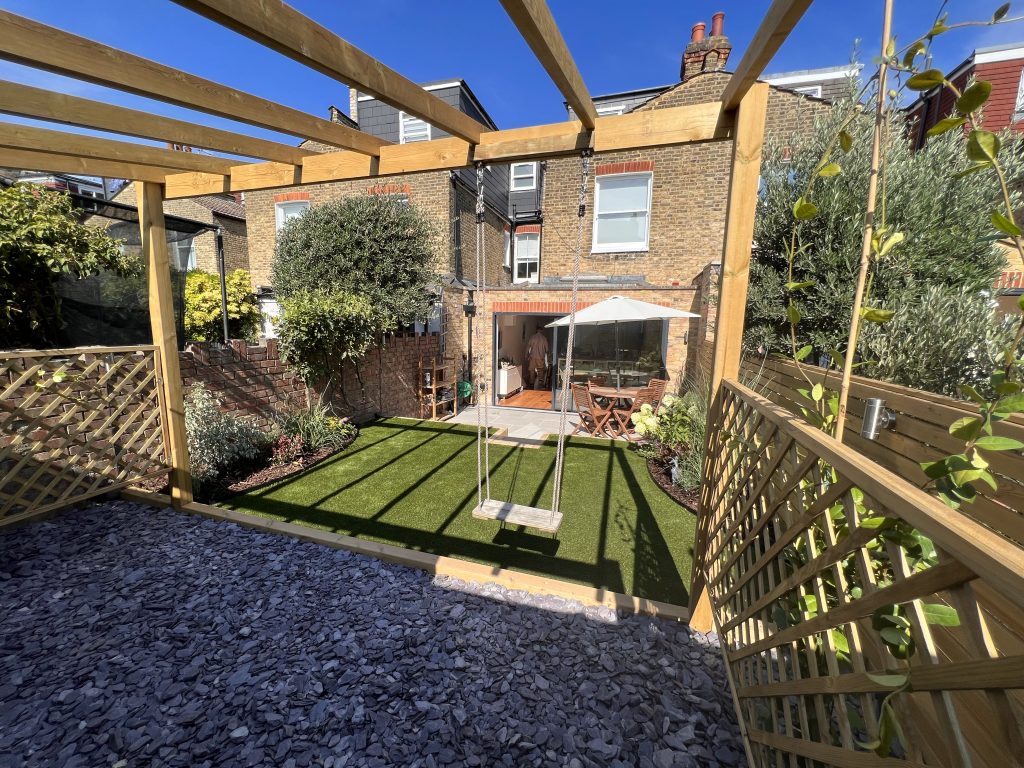
Flat gardens read flat. Even small changes in height add a layered, sculptural quality that makes the same square footage feel substantially bigger, because the eye processes vertical interest differently from horizontal interest.
You don’t need much. Two steps up onto a raised deck or down into a sunken patio creates a meaningful elevation shift without major structural work. A low retaining wall holding back a planted border separates seating from planting and gives the garden a clear visual hierarchy. Reclaimed railway sleepers handle this kind of work with a rough-and-ready look that suits cottage gardens. Brick or rendered blockwork produces cleaner lines for more contemporary properties.
Sunken seating has been having a moment in London garden design and the popularity is justified. A sunken patio with planted borders rising to eye level when you’re sitting down feels like a hidden room within the garden. The rest of the plot, viewed from below, gains real height and presence. Even three or four square metres of sunken area can become the most-used part of a small garden.
A raised platform at the far end works the opposite way to similar effect. Building a deck or patio at the back of a long thin plot pulls your eye down the length of the garden and rewards the journey with a different view back towards the house. Add a pergola overhead and you’ve created an outdoor room that didn’t exist before.
There’s a drainage benefit too. South west London sits on heavy clay, which means flat gardens turn boggy through wet winters. Raising patios and seating areas above ground level keeps them usable when the rest of the garden is squelching.
7. Make Storage Space
A garden full of stuff feels smaller than the same garden empty of stuff. Wheelbarrows leaning against fences, pots stacked in corners, hoses coiled across the lawn, bags of compost slumped against the shed. Each thing seems harmless on its own. Together they fill the space with chaos, and your eye reads chaos as smallness regardless of the actual measurements.
Built-in storage solves it permanently. A bench seat with a hinged lid swallows cushions and small tools without taking any space that wasn’t already committed to seating. A slim cedar storage unit running along one fence absorbs the lawnmower, watering cans, hand tools, and bags of compost, and reads as part of the boundary rather than as another thing taking up room.
Vertical storage handles whatever doesn’t fit horizontally. Garden tools hanging from hooks on a fence-mounted rail look intentional rather than messy and keep everything off the ground. A wall-mounted hose reel solves the tangled-hose problem in about as long as it takes to drink a cup of tea. Compost bins tucked behind trellis screens disappear from view while still doing their work.
Sheds need careful thought. The pebbledash-and-felt shed of mid-twentieth-century gardens has become a visual liability rather than an asset. A modern cedar or charred timber design is a different beast entirely, and a green roof planted with sedum recovers some of the planted surface area lost to the shed footprint. Done well, the shed stops being something to hide and becomes something worth looking at.
The Southwest London Gardener Landscaping Services
The Southwest London Gardener has been transforming compact gardens across Twickenham, Wandsworth, Teddington, Putney, Wimbledon, and Battersea for over a decade. The team handles the full process, from design and 3D visualisation through hard landscaping, planting, and ongoing maintenance, with particular experience in the kinds of plots most homeowners assume have already maxed out their potential. Shaded courtyards have become outdoor dining rooms. Long thin strips behind Victorian terraces have become proper family gardens. Tired patios have been redesigned into spaces that genuinely add value to the houses behind them.
A free site visit costs you nothing more than an hour of conversation in your own garden. You get an honest assessment of what’s realistically achievable within your budget, ideas you may not have considered, and a clearer sense of which interventions matter most. No obligation, no hard sell. Get in touch to arrange a visit, or have a look through the completed project gallery for a clearer picture of what’s possible.